
Pulse Wave Velocity and Vascular Aging: What Arterial Stiffness Can Reveal
Pulse wave velocity is a research-backed measure of arterial stiffness. Learn how it relates to vascular aging, risk, testing limits, and healthy habits.
Table of Contents
DISCLAIMER
This article is for informational purposes only and does not constitute medical advice. The statements in this article have not been evaluated by the FDA. The information presented is based on published research and should not be used as a substitute for professional medical guidance. Consult your physician before starting any supplement or health protocol.
Arteries are not rigid plumbing. With every heartbeat, the aorta expands to accept blood and recoils to keep it moving between beats. Pulse wave velocity in vascular aging describes how quickly that pressure wave travels through the arterial tree. A faster wave generally indicates a stiffer pathway, although blood pressure, technique, and temporary physiological conditions can all affect the reading.
The measure is attractive because it converts an otherwise invisible mechanical change into a number. It is also easy to oversimplify. Pulse wave velocity is not a countdown clock, a diagnosis by itself, or proof that an artery has a particular “biological age.” Its value comes from standardized measurement and interpretation alongside conventional cardiovascular risk factors.
What pulse wave velocity measures
A pressure wave created by ventricular contraction travels much faster than the blood cells themselves. In a compliant young artery, part of the heart’s energy is absorbed as the vessel wall stretches. When the wall is stiffer, the wave moves more quickly.
Clinicians and researchers estimate velocity by measuring the distance between two recording sites and dividing it by the pulse transit time. Carotid-femoral pulse wave velocity is commonly treated as the reference approach for aortic stiffness because the route samples large central arteries. Brachial-ankle systems are convenient and widely used in parts of Asia, but they cover a different vascular path and have their own reference ranges.
Distance is not trivial. A tape measure follows the body surface rather than the exact artery. Devices also identify the pulse “foot” with different sensors and algorithms. A difference between two tests may reflect method as well as biology, which is why serial tracking is most useful when the same validated protocol is repeated.
Why arteries tend to stiffen with age
Elastin in the arterial wall repeatedly stretches over billions of heartbeats. Over time it can fragment, while collagen becomes more influential. Collagen cross-linking, calcification, oxidative stress, inflammation, and changes in smooth-muscle tone may all increase stiffness. High blood pressure adds both an immediate mechanical effect and longer-term remodeling.
Metabolic disease, kidney disease, smoking, and chronic inflammation can accelerate these changes. Aging remains a major influence, but people of the same chronological age can have meaningfully different measurements because their exposures and health histories differ.
Stiffness also changes the timing of reflected pressure waves. When reflected waves return earlier, they may raise late-systolic pressure in the aorta. That can increase the load faced by the left ventricle and reduce the pressure pattern that supports coronary flow during diastole. Researchers also study whether excessive pulsatile energy reaches small vessels in organs such as the brain and kidneys.
What research findings mean
The 2010 systematic review led by Charalambos Vlachopoulos pooled longitudinal studies and found that higher aortic pulse wave velocity was associated with cardiovascular events and mortality. A 2014 individual-participant meta-analysis led by Carmel McEniery and colleagues analyzed 17,635 participants and reported that aortic pulse wave velocity improved risk prediction beyond established factors, particularly in some intermediate-risk groups.
These are prognostic associations, not evidence that the velocity itself is the sole cause of every event. Stiffness sits inside a network that includes blood pressure, lipids, glucose regulation, kidney function, smoking, and fitness. A number may summarize accumulated vascular stress while also contributing to that stress.
Expert consensus documents have emphasized careful technique because the measurement is sensitive to posture, recent exercise, caffeine, meals, room temperature, and heart rhythm. Most studies use a rested participant in a controlled setting. Comparing a home estimate taken after coffee with a clinic result taken after rest can create false precision.
Testing and interpretation
A formal test is generally painless. Sensors record pulse waveforms at two sites, and the device calculates transit time. Some systems use tonometry, some use cuffs, and others combine electrocardiography with optical or pressure signals. The report should identify the method, path, units, and reference population.
Age-specific context matters because average velocity rises across adulthood. Blood pressure at the moment of testing matters too: a higher distending pressure makes the artery appear mechanically stiffer even without structural change. Medication timing and an irregular rhythm can complicate comparisons.
Consumer “vascular age” products may be useful for engagement, but their algorithms can be proprietary and their validation populations narrow. A result should not prompt medication changes or expensive interventions without clinical assessment. Standard risk tools and measurements such as office or home blood pressure remain more established for routine decisions.
Practical implications
The useful response to an elevated measurement is usually not to chase a proprietary anti-stiffness supplement. It is to review the major drivers of vascular risk. Regular aerobic activity, appropriate resistance training, smoking cessation, sleep, and a dietary pattern rich in minimally processed foods support cardiovascular health. Blood pressure, diabetes, lipids, and kidney disease deserve evidence-based management with a qualified professional.
Exercise trials often report improvements in stiffness, but protocols, populations, and measurement paths differ. Weight loss may help when excess adiposity and metabolic dysfunction are present, yet rapid or extreme regimens are unnecessary. No single food can reverse decades of arterial remodeling.
If pulse wave velocity is repeated, consistency improves interpretability: similar time of day, pre-test rest, device, and measurement path. The goal is a credible trend, not a daily score that reacts to every transient change.
Limitations and future research
Reference values vary across populations and devices. Surface distance introduces error, and arterial stiffness is not uniform throughout the body. Most evidence is observational, so a strong association does not automatically show that lowering the number itself will lower events by the same proportion.
Researchers are integrating stiffness with central blood pressure, wave reflection, imaging, and biomarkers. Wearables may eventually make repeated measurements easier, but algorithms need independent validation across ages, skin tones, rhythms, medications, and disease states.
The bottom line
Pulse wave velocity is one of the most useful research measures of large-artery stiffness and can add context to vascular aging. It becomes meaningful when the method is sound and the number is interpreted with blood pressure and overall cardiovascular risk—not when it is treated as a standalone age score.
Frequently Asked Questions
What is a good pulse wave velocity for my age?
Can pulse wave velocity be lowered?
Is a smartwatch vascular-age score the same as carotid-femoral pulse wave velocity?
Sources
Stay Updated on Longevity Science
Weekly research digests. No spam, unsubscribe anytime.
Related Articles

Ankle Power and Healthy Aging: The Push-Off That Keeps Walking Efficient
Ankle plantar-flexor power supports walking speed and balance recovery. Learn why push-off changes with age and how strength can be trained safely.
9 min read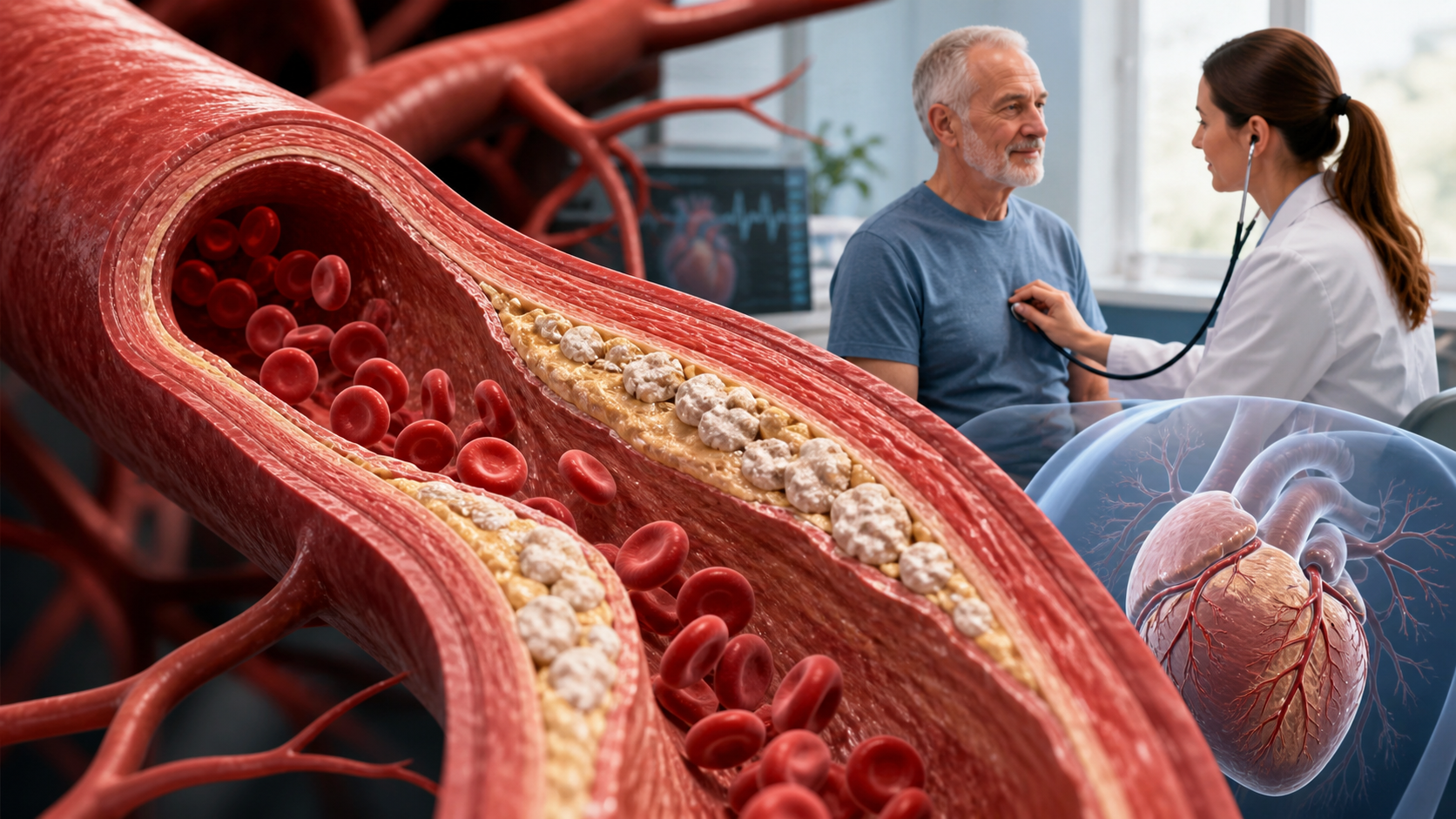
Arterial Calcification and Vascular Aging: Reading the Risk Signals
Arterial calcification can reveal accumulated vascular risk. Learn what calcium scores mean, why calcification develops, and where testing has limits.
10 min read
Arterial Stiffness and Vascular Age: A Longevity Evidence Guide
Understand arterial stiffness vascular age longevity links, key studies, measurement limits, and evidence-based lifestyle implications for healthy aging.
11 min read