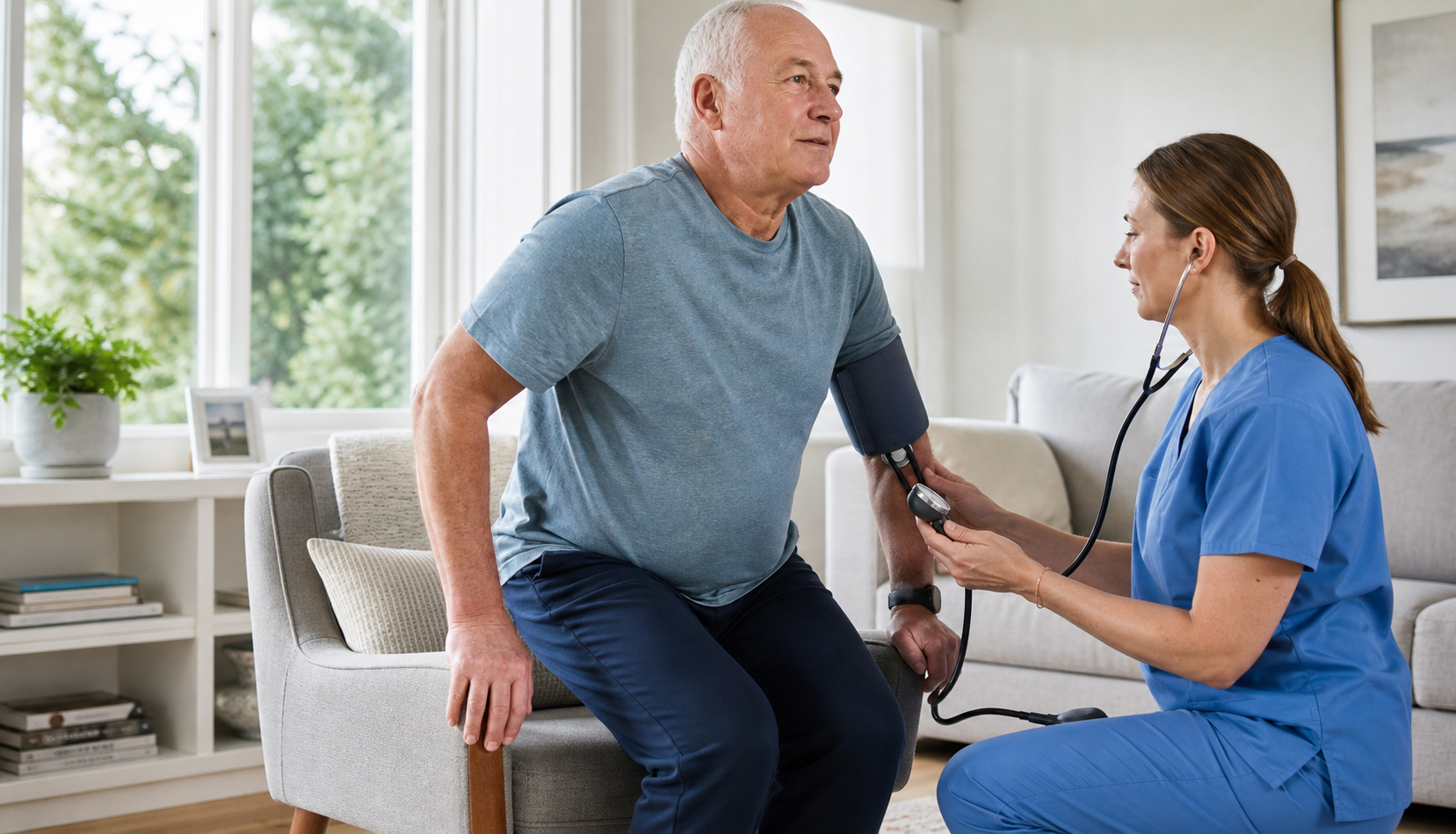
Standing Blood Pressure Recovery and Healthy Aging
Blood pressure must adjust quickly after standing. Learn why recovery may slow with age, what symptoms matter, and how clinicians evaluate orthostatic changes.
Table of Contents
DISCLAIMER
This article is for informational purposes only and does not constitute medical advice. The statements in this article have not been evaluated by the FDA. The information presented is based on published research and should not be used as a substitute for professional medical guidance. Consult your physician before starting any supplement or health protocol.
Standing looks simple, but it triggers a rapid cardiovascular adjustment. Gravity shifts blood toward the legs and abdomen. Without compensation, less blood returns to the heart and blood flow to the brain can briefly fall.
The body normally responds by tightening blood vessels and adjusting heart rate. With aging, illness, dehydration, prolonged bed rest, or certain medications, that recovery can become slower or incomplete. The result may be lightheadedness, blurred vision, weakness, or a fall soon after rising.
What Happens in the First Minutes After Standing
Pressure sensors in major arteries detect the change and activate the autonomic nervous system. Blood vessels constrict, the heart adapts, and leg muscles help return blood upward. These overlapping responses usually stabilize circulation quickly.
Orthostatic hypotension is conventionally defined as a sustained drop of at least 20 mm Hg in systolic pressure or 10 mm Hg in diastolic pressure within three minutes of standing. The number is useful, but symptoms, timing, baseline blood pressure, and the reason for the change all matter.
Some people have an immediate, brief drop that a standard cuff may miss. Others decline later after several minutes. A normal single reading does not fully explain recurrent episodes, which is why clinicians may repeat measurements or use continuous monitoring in selected cases.
Why Recovery Can Change With Age
Arteries may become stiffer, reflexes less responsive, and muscle pumping less effective. Diabetes, Parkinsonian disorders, peripheral neuropathy, heart conditions, anemia, and acute illness can interfere with compensation. Heat, alcohol, a large meal, and dehydration can magnify the challenge.
Many useful medicines also affect blood pressure or fluid balance. Diuretics, vasodilators, some prostate medicines, sedatives, and combinations of drugs may contribute. That does not mean they should be stopped. A medication review weighs standing symptoms against the conditions the treatment is protecting.
Patterns help. Symptoms after the first rise of the morning, after meals, during hot showers, or after prolonged sitting provide clues. Fainting, chest discomfort, palpitations, injury, black stools, or new neurological symptoms need prompt medical evaluation.
Safer Daily Transitions
Rise in stages: move from lying to sitting, pause, then stand with a stable support available. Before standing, ankle pumps or gentle leg contractions may activate the muscle pump. Keep pathways clear and avoid walking immediately if vision dims or balance feels uncertain.
Adequate fluid and salt strategies can help some people, but they are not universal advice. Heart failure, kidney disease, hypertension, and other conditions can make extra fluid or sodium harmful. Compression garments and physical counter-maneuvers also require individualized guidance.
Clinicians may measure blood pressure and pulse after resting and again while standing, review medicines, assess hydration, and investigate anemia, rhythm problems, or autonomic dysfunction when indicated. Treatment targets the cause while reducing fall risk.
Standing blood pressure recovery is not a do-it-yourself longevity score. It is a dynamic function that links circulation, nerves, muscle, medication, and environment. Paying attention to symptoms and transitions can prevent injury and reveal treatable problems before they quietly limit independence.
Frequently Asked Questions
What is orthostatic hypotension?
Does dizziness after standing always mean low blood pressure?
Should blood pressure medicine be stopped if standing causes dizziness?
Sources
Stay Updated on Longevity Science
Weekly research digests. No spam, unsubscribe anytime.
Related Articles
Ankle Power and Healthy Aging: The Push-Off That Keeps Walking Efficient
Ankle plantar-flexor power supports walking speed and balance recovery. Learn why push-off changes with age and how strength can be trained safely.
9 min read
Arterial Calcification and Vascular Aging: Reading the Risk Signals
Arterial calcification can reveal accumulated vascular risk. Learn what calcium scores mean, why calcification develops, and where testing has limits.
10 min read
Arterial Stiffness and Vascular Age: A Longevity Evidence Guide
Understand arterial stiffness vascular age longevity links, key studies, measurement limits, and evidence-based lifestyle implications for healthy aging.
11 min read