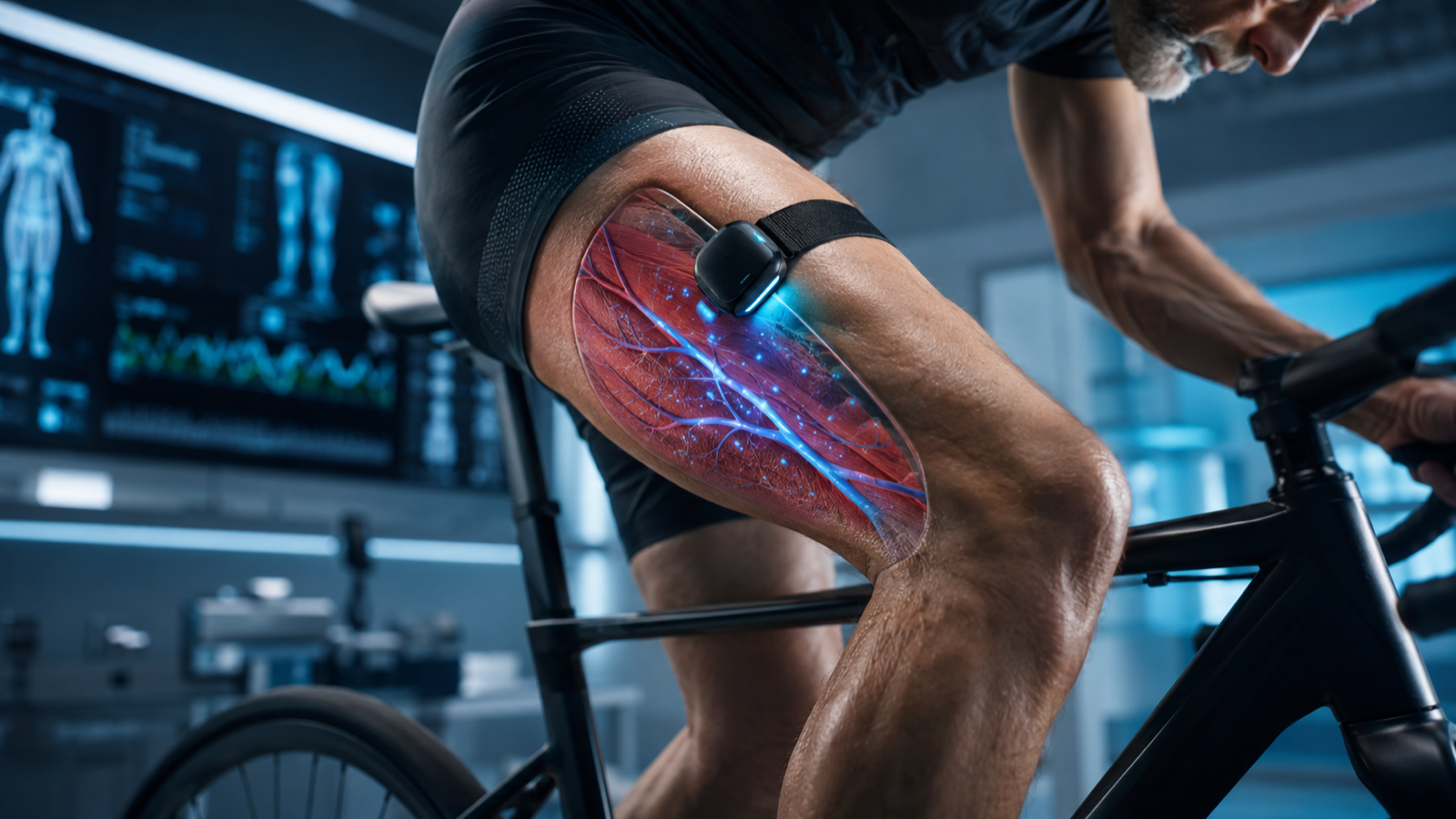
Muscle Oxygen Saturation and Healthy Aging: A Guide to Wearable NIRS
Muscle oxygen saturation wearables promise a window into local oxygen use. Here is what NIRS measures, how aging affects it, and key limitations.
Table of Contents
DISCLAIMER
This article is for informational purposes only and does not constitute medical advice. The statements in this article have not been evaluated by the FDA. The information presented is based on published research and should not be used as a substitute for professional medical guidance. Consult your physician before starting any supplement or health protocol.
A finger pulse oximeter can look normal while a working quadriceps struggles to match oxygen delivery with demand. Wearable near-infrared spectroscopy, or NIRS, tries to observe that local balance. Interest in muscle oxygen saturation and healthy aging comes from the hope that a small sensor can reveal microvascular and metabolic changes before ordinary performance tests do.
The technology is useful, but its number—often labeled SmO2—is not a miniature blood test. It is an optical estimate shaped by anatomy, device algorithms, and movement.
What NIRS actually measures
Near-infrared light penetrates skin and superficial tissue. Oxygenated and deoxygenated hemoglobin and myoglobin absorb that light differently. A detector measures returning light, and an algorithm estimates the relative oxygenation of the sampled region.
The signal represents local supply and use. Arterial blood brings oxygen; muscle extracts it; venous blood carries the remainder away. During exercise, SmO2 may fall as demand rises, then recover when intensity decreases. A rapid fall is not automatically bad, and a high number is not automatically good.
Unlike finger SpO2, muscle NIRS does not isolate arterial saturation. It samples a mixture of vessels and myoglobin, often weighted toward the venous side. It also measures only a shallow volume beneath one placement.
How aging could change the pattern
Healthy aging can alter endothelial function, capillary density, red-blood-cell flow, mitochondrial capacity, muscle fiber composition, and autonomic control. Reduced muscle mass and increased subcutaneous or intramuscular fat can further change both physiology and optical sampling.
During a standardized task, an older muscle might show slower oxygen delivery, greater extraction, or delayed recovery. But the direction depends on workload. If two people walk at the same speed, that speed may represent a higher relative effort for one. If they work at the same percentage of individual capacity, the comparison may change.
Training status often matters as much as chronological age. An active older adult may have a more capable local response than a sedentary younger adult. Disease, medications, anemia, temperature, and hydration add more variation.
What exercise patterns can mean
At the start of exercise, SmO2 commonly declines as oxygen use increases. If blood flow catches up, the value may stabilize. During intervals, repeated deoxygenation and reoxygenation can help athletes judge local muscular strain.
Recovery kinetics may be especially informative in research. Faster reoxygenation after a standardized contraction can suggest better oxygen delivery, while a sluggish curve may reflect vascular, metabolic, or measurement factors. Researchers sometimes use a brief arterial occlusion to calibrate the individual range, but that procedure requires training and is not a casual home test.
Trends within the same person, device, muscle, placement, and protocol are generally more interpretable than cross-person comparisons. Even then, day-to-day noise can be substantial.
The hardware problem
Skin pigment, adipose thickness, sensor pressure, ambient light, sweating, and motion can affect optical readings. Devices use different source-detector distances, wavelengths, smoothing, and proprietary calculations. Two wearables placed side by side may disagree.
Placement is another major source of error. Moving the sensor a few centimeters can sample a different part of a muscle or a different tissue depth. A mark, photo, and standardized strap tension improve repeatability.
Consumer dashboards may present whole-number precision that exceeds biological confidence. A change from 62% to 64% may be ordinary noise unless the protocol and device have demonstrated sufficient reliability.
Useful applications
For endurance training, NIRS can supplement power, pace, heart rate, and perceived effort. A cyclist may observe whether local oxygenation recovers between intervals or whether one leg repeatedly differs. In resistance exercise, the device can show the strong local desaturation created by sustained contractions.
In research and rehabilitation, NIRS may help study peripheral limitations when whole-body oxygen measures do not explain fatigue. It can also add information about microvascular responses during walking or strength tasks.
The safest interpretation is descriptive: “under this standardized condition, this local signal changed.” It should not become a claim that a person has younger mitochondria, better arteries, or a longer lifespan.
A practical tracking protocol
Choose one muscle and placement, use the same device and strap, and record a repeatable warm-up. Perform a fixed task such as a submaximal cycling stage or repeated sit-to-stands only if it is safe for you. Note workload, heart rate, perceived exertion, temperature, and unusual fatigue.
Look at the curve rather than a single minimum. Track baseline, change during work, time to a stable level, and recovery over a fixed interval. Interpret several sessions, not one.
If performance improves while the same workload feels easier, that outcome is more meaningful than an isolated SmO2 change. The wearable should support training decisions, not override symptoms.
Limitations and future research
Wearable NIRS needs stronger independent validation across skin tones, adipose thicknesses, ages, and clinical conditions. Proprietary algorithms complicate comparisons and long-term continuity when firmware changes.
Future systems may combine NIRS with accelerometry, power, heart rate, and ultrasound-derived anatomy. Better calibration could separate delivery from extraction and distinguish genuine physiological change from sensor noise.
The bottom line
Muscle oxygen saturation provides a fascinating local view of exercise, but it is highly context dependent. For healthy aging, strength, aerobic capacity, mobility, symptoms, and established clinical measures remain the foundation; NIRS is best treated as an optional trend tool.
Frequently Asked Questions
What is a normal muscle oxygen saturation?
Is muscle oxygen saturation the same as pulse-oximeter SpO2?
Can a wearable NIRS device detect poor circulation?
Sources
- Understanding near infrared spectroscopy and its application to skeletal muscle research(2019)
- Muscle oxygen consumption and microvascular function in healthy aging assessed by near-infrared spectroscopy(2025)
- The Challenge of Measuring Exercise: Advancing Metrological Barriers in Wearable Sensing(2025)
Stay Updated on Longevity Science
Weekly research digests. No spam, unsubscribe anytime.
Related Articles
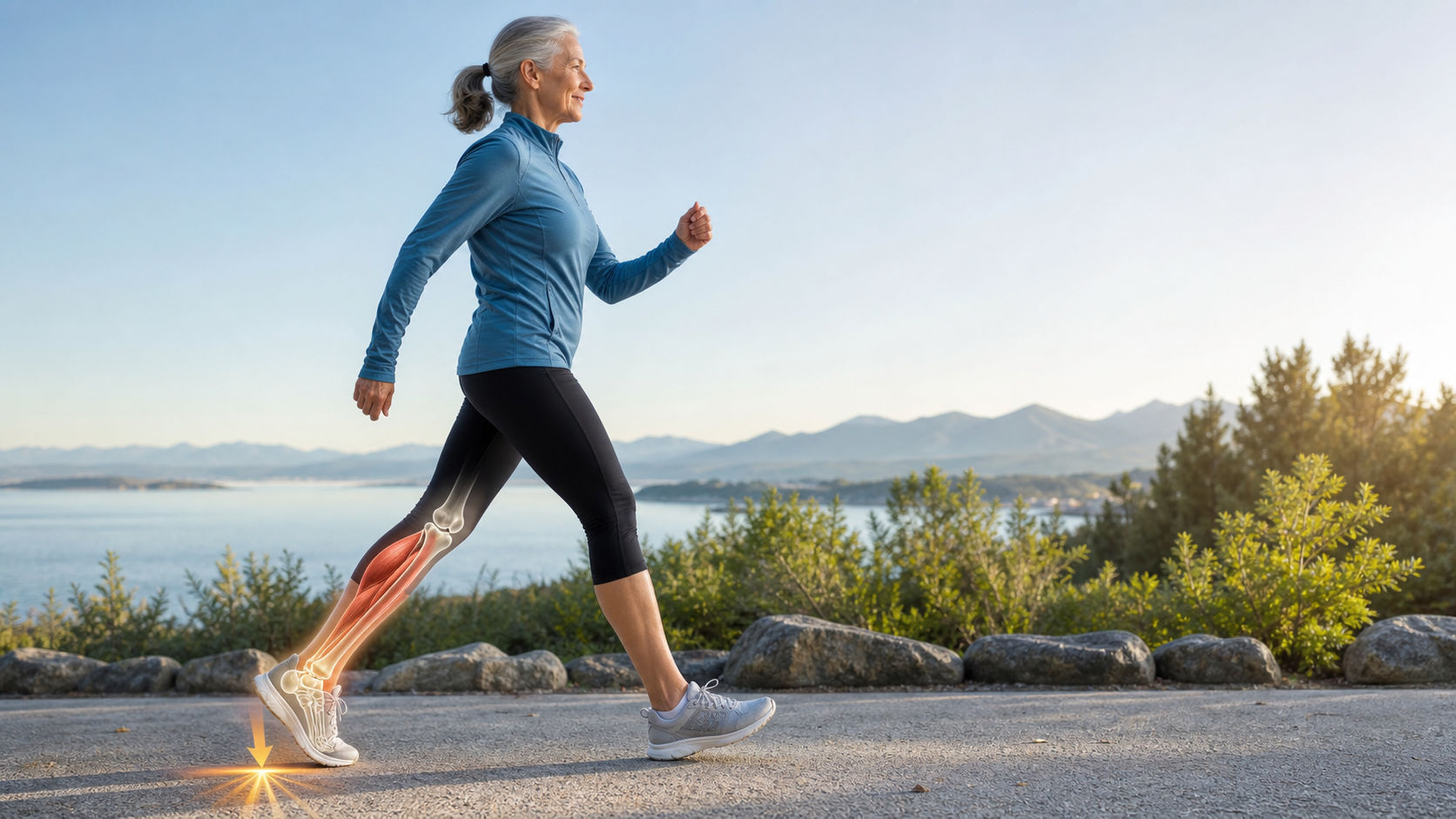
Ankle Power and Healthy Aging: The Push-Off That Keeps Walking Efficient
Ankle plantar-flexor power supports walking speed and balance recovery. Learn why push-off changes with age and how strength can be trained safely.
9 min read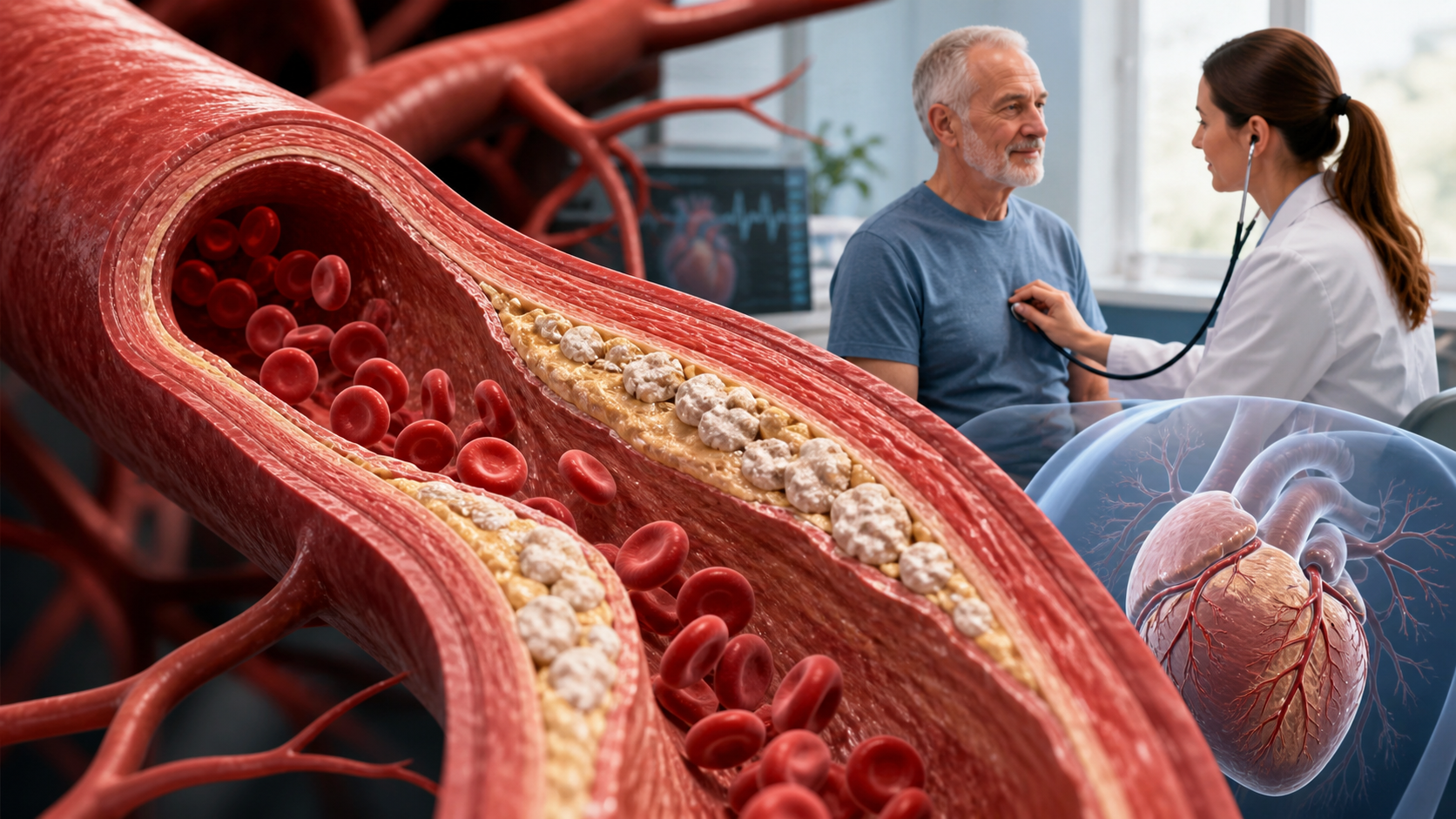
Arterial Calcification and Vascular Aging: Reading the Risk Signals
Arterial calcification can reveal accumulated vascular risk. Learn what calcium scores mean, why calcification develops, and where testing has limits.
10 min read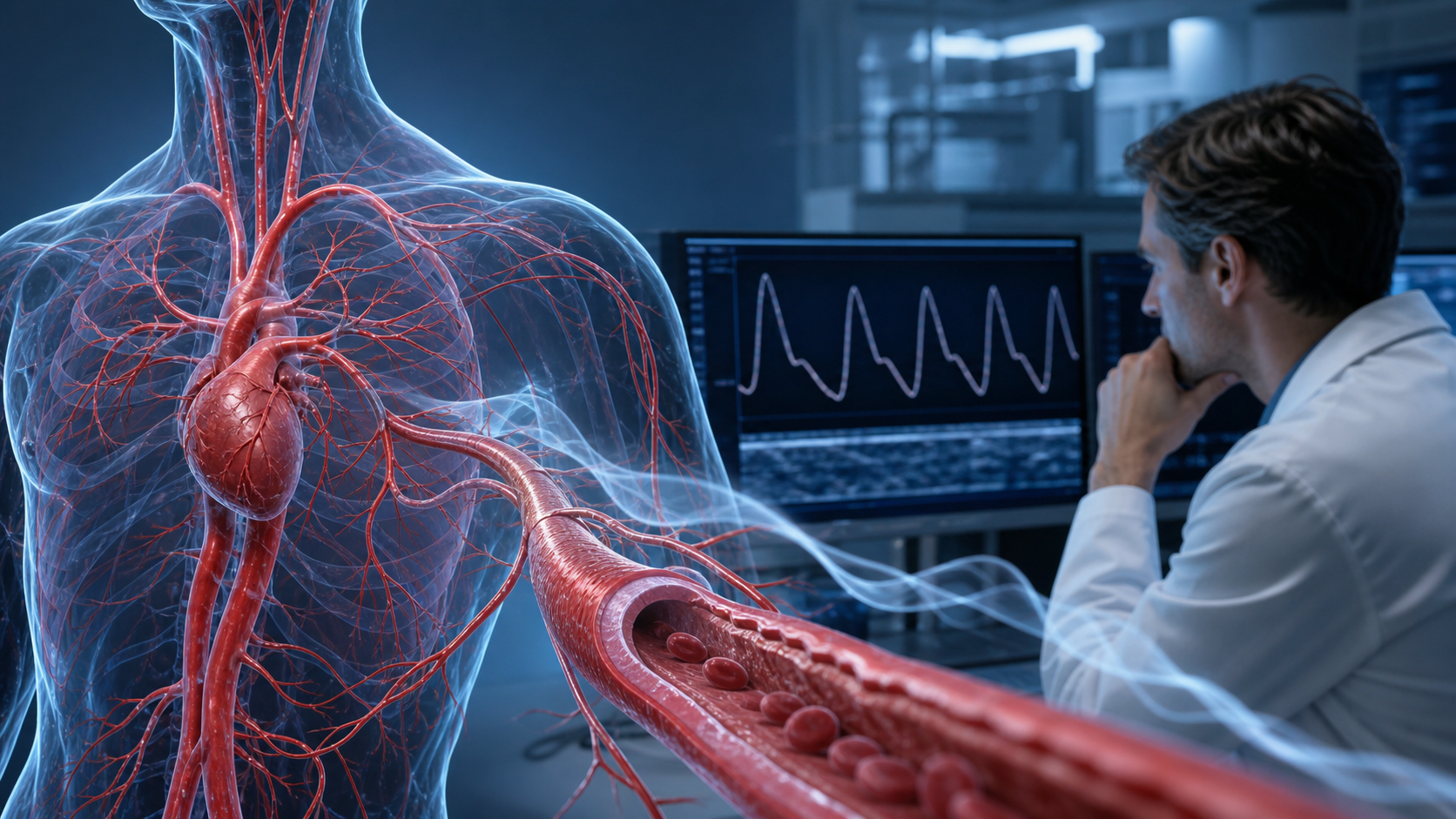
Arterial Stiffness and Vascular Age: A Longevity Evidence Guide
Understand arterial stiffness vascular age longevity links, key studies, measurement limits, and evidence-based lifestyle implications for healthy aging.
11 min read