Lymphatic Vessel Function and Aging: The Body's Fluid Return Network
Lymphatic vessels return tissue fluid and support immune traffic. Learn how aging may affect lymph flow, vessel pumping, and what current research can show.
Table of Contents
DISCLAIMER
This article is for informational purposes only and does not constitute medical advice. The statements in this article have not been evaluated by the FDA. The information presented is based on published research and should not be used as a substitute for professional medical guidance. Consult your physician before starting any supplement or health protocol.
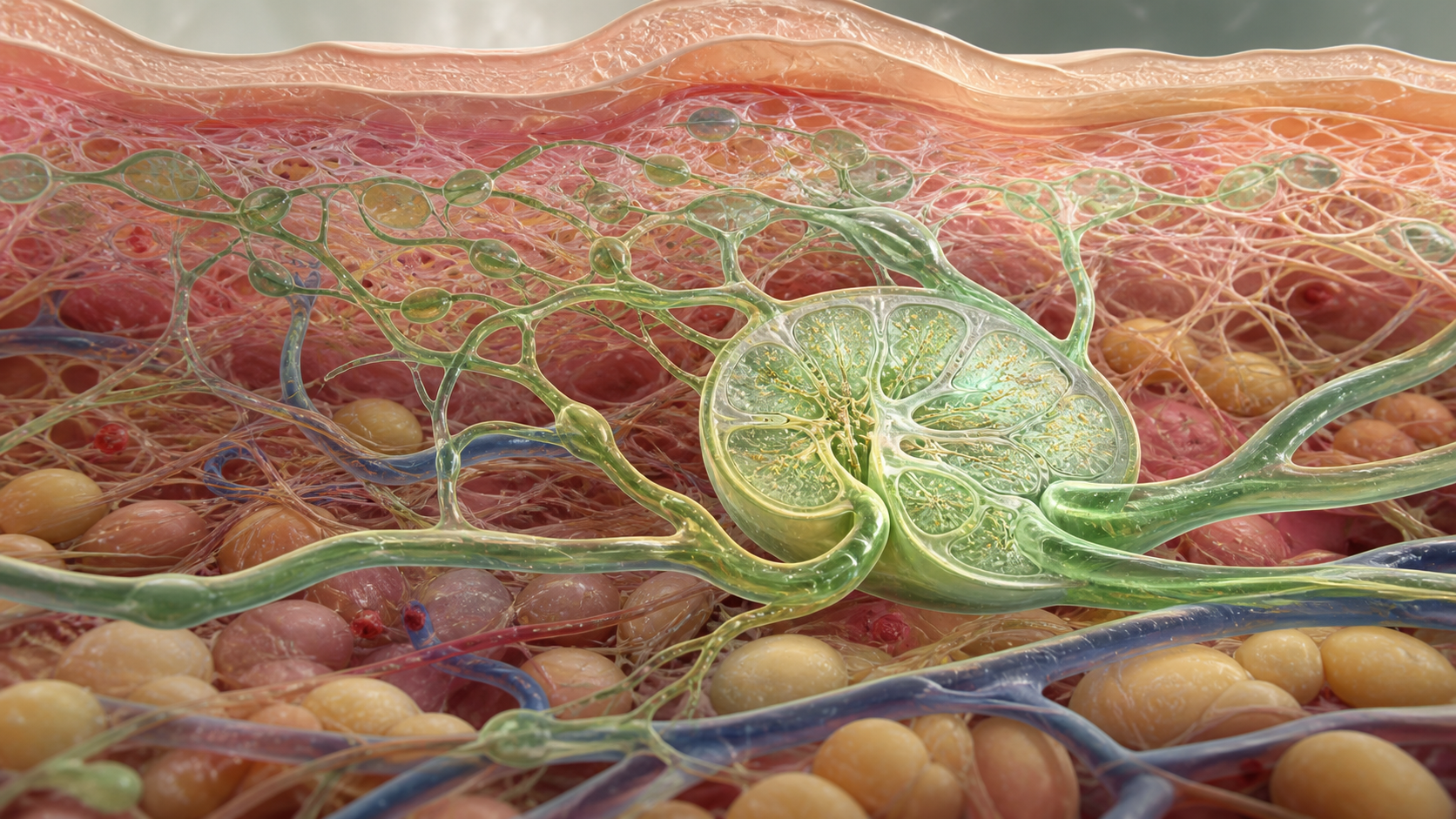
Blood vessels deliver fluid under pressure, but not all of that fluid returns directly through veins. Some remains between cells along with proteins and other material. The lymphatic system collects this excess, moves it through lymph nodes, and ultimately returns it to the bloodstream.
This network also transports absorbed fats from the intestine and provides routes through which immune cells survey tissues. Because its smallest vessels are thin and nearly transparent, lymphatic circulation received less attention than arteries and veins for many years. New imaging and molecular tools are now revealing how the network changes with age.
How Lymph Moves Without a Central Heart
Initial lymphatic capillaries begin as blind-ended vessels within tissues. Overlapping endothelial cells can open when pressure rises outside the vessel, allowing fluid, proteins, immune cells, and particles to enter. Anchoring structures help keep the vessel from collapsing as tissue pressure changes.
The fluid then enters collecting lymphatic vessels. These contain one-way valves and segments surrounded by smooth-muscle cells. Rhythmic contraction can propel lymph forward, while skeletal-muscle movement, breathing, and nearby arterial pulsation provide additional forces.
Lymph nodes sit along the route. They are not simple filters; they are organized immune environments where cells and antigens meet. After passing through larger ducts, lymph rejoins the venous circulation near the neck.
Flow differs by tissue and situation. A meal changes intestinal lymph. Exercise changes muscle movement and fluid production. Inflammation can make blood vessels leakier and increase the material lymphatics must clear. The network must adapt rather than maintain one constant speed.
What Research Suggests About Aging
Animal studies have identified age-related changes in lymphatic pumping, valve function, vessel permeability, smooth-muscle coverage, and inflammatory signaling. Older collecting vessels may contract less effectively in some models, while the endothelial barrier can become less selective.
Immune changes may interact with the plumbing. Chronic inflammatory signals can alter lymphatic endothelial cells and surrounding tissue. Fibrosis can make the environment less flexible. At the same time, weaker transport may delay the movement of immune cells or inflammatory material. Cause and consequence can reinforce each other.
Human evidence is more limited. Lymphatic vessels are difficult to image throughout the body, and findings from one region cannot automatically be applied everywhere. Cancer treatment, surgery, infection, obesity, venous disease, mobility, and genetics can affect lymphatic function more strongly than age alone.
Researchers are also studying specialized lymphatic beds around the intestine, skin, heart, and meninges. These systems share core features but have different demands. There is no single universal rate of lymphatic aging.
What Supports Lymph Flow in Daily Life
Ordinary movement changes tissue pressure and activates the muscle pump. Walking, joint movement, and breathing therefore contribute to fluid return. That does not mean vigorous exercise is safe for everyone with swelling; people with diagnosed lymphedema often need an individualized plan from a qualified clinician or therapist.
Compression garments, manual techniques, skin care, and exercise may be used in lymphedema management under professional guidance. They are treatments for a defined condition, not proof that a healthy person needs a lymphatic detox.
Swelling should be interpreted carefully. Sudden one-sided leg swelling, pain, redness, chest symptoms, or shortness of breath can signal urgent problems. Persistent swelling may involve veins, the heart, kidneys, liver, medications, injury, infection, or lymphatics. A cleanse cannot distinguish among them.
Hydration supports normal physiology, but forcing excessive water does not flush the lymphatic system. Likewise, teas, supplements, dry brushing, and massage marketed as detoxification have not been shown to reverse lymphatic aging.
The lymphatic network is best understood as quiet infrastructure. It balances tissue fluid, connects local events with immune organs, and adapts to meals, movement, and inflammation. Aging may reduce some of that adaptability, but clinical assessment and ordinary movement are more meaningful than promises to cleanse an invisible system.
Frequently Asked Questions
What do lymphatic vessels do?
Does swelling always mean lymphatic failure?
Can a cleanse improve lymphatic aging?
Sources
Stay Updated on Longevity Science
Weekly research digests. No spam, unsubscribe anytime.
Related Articles

Ankle Power and Healthy Aging: The Push-Off That Keeps Walking Efficient
Ankle plantar-flexor power supports walking speed and balance recovery. Learn why push-off changes with age and how strength can be trained safely.
9 min read
Arterial Calcification and Vascular Aging: Reading the Risk Signals
Arterial calcification can reveal accumulated vascular risk. Learn what calcium scores mean, why calcification develops, and where testing has limits.
10 min read
Arterial Stiffness and Vascular Age: A Longevity Evidence Guide
Understand arterial stiffness vascular age longevity links, key studies, measurement limits, and evidence-based lifestyle implications for healthy aging.
11 min read