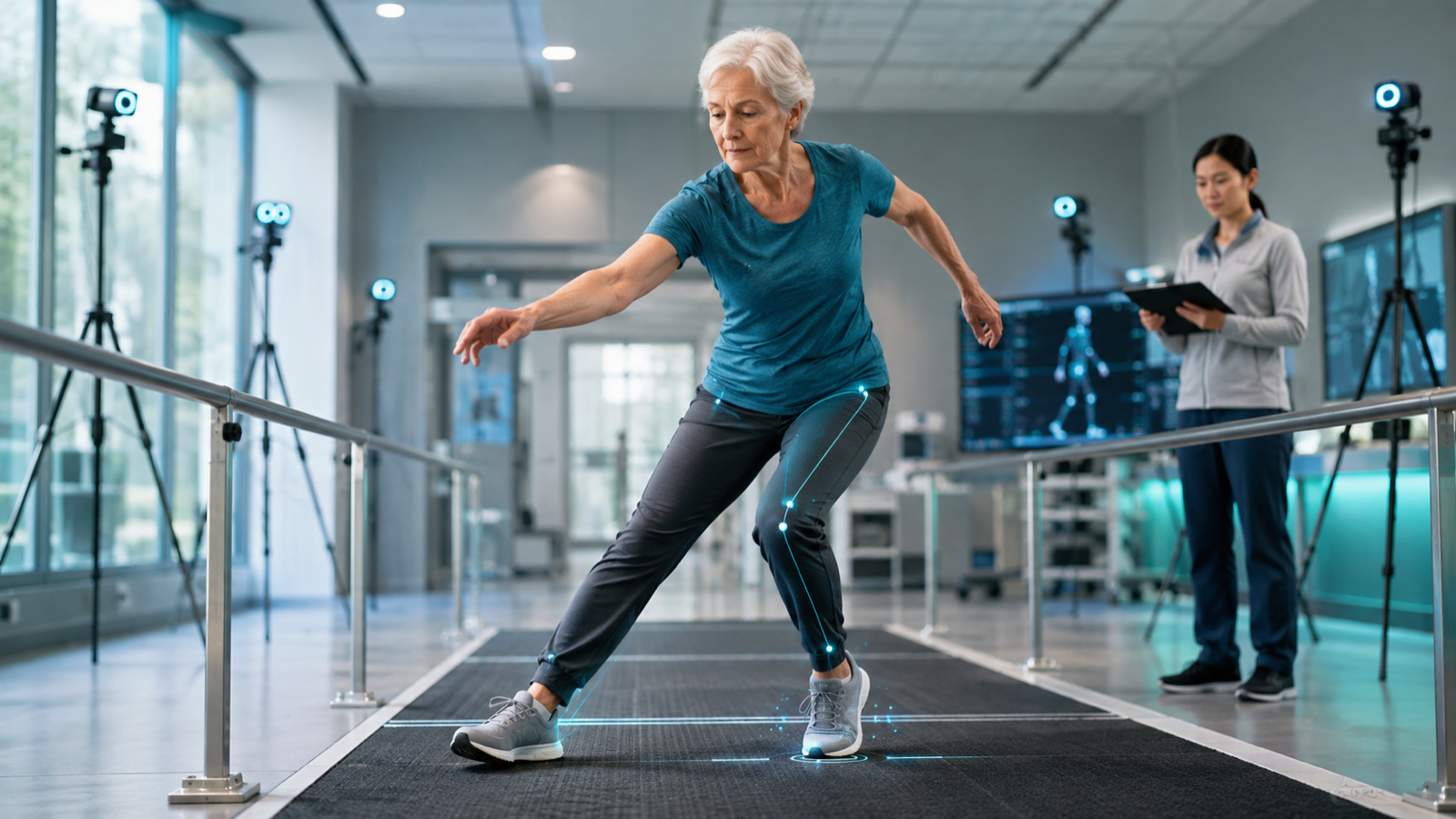
Lower-Body Reaction Time and Fall Risk: Why Fast Stepping Matters With Age
Lower-body reaction time affects how quickly a person can recover from a trip or slip. Learn what stepping tests reveal and how training may help.
Table of Contents
DISCLAIMER
This article is for informational purposes only and does not constitute medical advice. The statements in this article have not been evaluated by the FDA. The information presented is based on published research and should not be used as a substitute for professional medical guidance. Consult your physician before starting any supplement or health protocol.
A stumble becomes a fall in a fraction of a second. The nervous system must detect the threat, select a direction, shift body weight, clear the foot, and place it where it can arrest momentum. Lower-body reaction time and fall risk are connected because even good strength is less useful if the protective step arrives too late.
Reaction time is not a single trait. A laboratory button press, a planned step toward a light, and an unexpected recovery from a moving platform test different systems. Healthy-aging research is increasingly interested in that distinction.
The sequence behind a protective step
Balance control begins with sensory evidence from vision, the vestibular system, skin, joints, and muscles. The brain estimates the body’s motion relative to its base of support. Small disturbances may be corrected at the ankle or hip. Larger ones require a step.
A successful response has several phases: detecting the event, deciding which foot and direction to use, releasing the stepping foot from load, producing enough power, clearing the floor, and controlling landing. Delay in any phase can narrow the margin for recovery.
Age can affect these components unevenly. Nerve conduction, sensory integration, attention, muscle power, joint mobility, and confidence may change. Some people respond quickly but take a short or poorly directed step. Others generate enough force but hesitate because they fear losing balance.
What stepping tests measure
Choice stepping reaction-time tests ask a person to step onto a target that appears without warning. They measure both cognitive selection and movement execution. More complex versions use several possible targets or require suppressing a misleading cue.
These tests are more functionally relevant than a hand-tap task, but they remain controlled. The participant knows a step will be requested, the floor is predictable, and obstacles are absent. Real falls may involve divided attention, carrying objects, dim light, or a trip that propels the body forward.
Perturbation tests are closer to balance recovery. A treadmill belt, platform, or therapist-applied disturbance creates an unexpected loss of stability while safety equipment prevents injury. Researchers can measure step latency, length, number of recovery steps, and trunk motion.
What the evidence suggests
Older adults with slower or less accurate choice stepping have shown higher fall rates in prospective studies. The association makes sense because the task integrates attention, inhibition, weight transfer, and rapid movement. However, performance partly reflects overall health and mobility, so it is not proof of a single causal pathway.
Training studies offer more direct evidence. Repeated rapid stepping can improve practiced responses. Perturbation-based balance training may help the nervous system learn from realistic slips and trips, and meta-analyses suggest it can reduce falls in some populations.
Transfer is the crucial question. Improvements on a test do not automatically prevent a fall on stairs or an uneven pavement. Programs are more plausible when they include multiple directions, unpredictable cues, progressive challenge, strength, and real-world movement.
Why cognition matters
Protective stepping is a decision under time pressure. A person may need to ignore the first available but unsafe landing spot, redirect around an obstacle, or recover while talking. Executive function and processing speed therefore influence performance.
Dual-task walking studies show that gait can become slower or more variable when attention is divided. This does not mean that every older adult should practice difficult mental tasks while balancing. It means clinicians may gain information by testing mobility under conditions that resemble daily life.
Medication effects, sleep loss, pain, anxiety, and vision can also slow selection or movement. A new decline deserves context rather than being dismissed as normal aging.
Training the response safely
Basic preparation includes lower-body strength, especially ankle, knee, and hip power; enough range of motion to clear the foot; and practice transferring weight. Supported multidirectional steps can begin beside a counter or rail. Targets can gradually become farther apart or less predictable.
More advanced drills may use visual cues, resisted steps, obstacle negotiation, or supervised perturbations. High-risk participants should not improvise sudden pushes or slippery surfaces. Physical therapists can provide a harness, guarding, and individualized progression.
Training quality matters more than frantic speed. The goal is a fast, well-directed, stable step. Fatigue that destroys landing control may rehearse the wrong pattern.
What a home test can and cannot tell you
A timed step test may track change when performed consistently, but it cannot diagnose fall risk alone. Footwear, flooring, device timing, and familiarity affect results. Comparing yourself with an online average may create false reassurance or unnecessary fear.
More actionable warning signs include repeated near-falls, needing furniture for support, difficulty rising from a chair, new dizziness, foot numbness, or a fall with injury. A clinical assessment can review strength, gait, vision, blood pressure responses, medications, and the home environment.
Limitations and future research
Researchers still debate which test best predicts real falls and how much improvement is clinically meaningful. Studies use different cues, distances, populations, and fall-reporting methods. People with neurological conditions may need different strategies than healthy community-dwelling adults.
Wearable sensors could eventually measure real-world near-falls and recovery steps, but algorithms need validation and privacy safeguards. The strongest future models will combine reaction, strength, gait, cognition, and exposure to hazards.
The bottom line
Fast stepping is one part of a robust balance system. Practicing rapid, accurate, multidirectional movement—at an appropriate safety level—may improve recovery capacity, but it works best alongside strength training, vision and medication review, and practical fall prevention.
Frequently Asked Questions
Is slow reaction time a direct cause of falls?
Can stepping speed improve after age 65?
Are phone reaction-time tests useful?
Sources
- Reproducibility and convergent validity of the BlazePod stepping reaction test in older people(2025)
- Effects of Perturbation-Based Treadmill Training on Balance Performance, Daily Life Gait, and Falls in Older Adults(2024)
- Perturbation-based Balance Training to improve postural responses and falls(2023)
Stay Updated on Longevity Science
Weekly research digests. No spam, unsubscribe anytime.
Related Articles

Ankle Power and Healthy Aging: The Push-Off That Keeps Walking Efficient
Ankle plantar-flexor power supports walking speed and balance recovery. Learn why push-off changes with age and how strength can be trained safely.
9 min read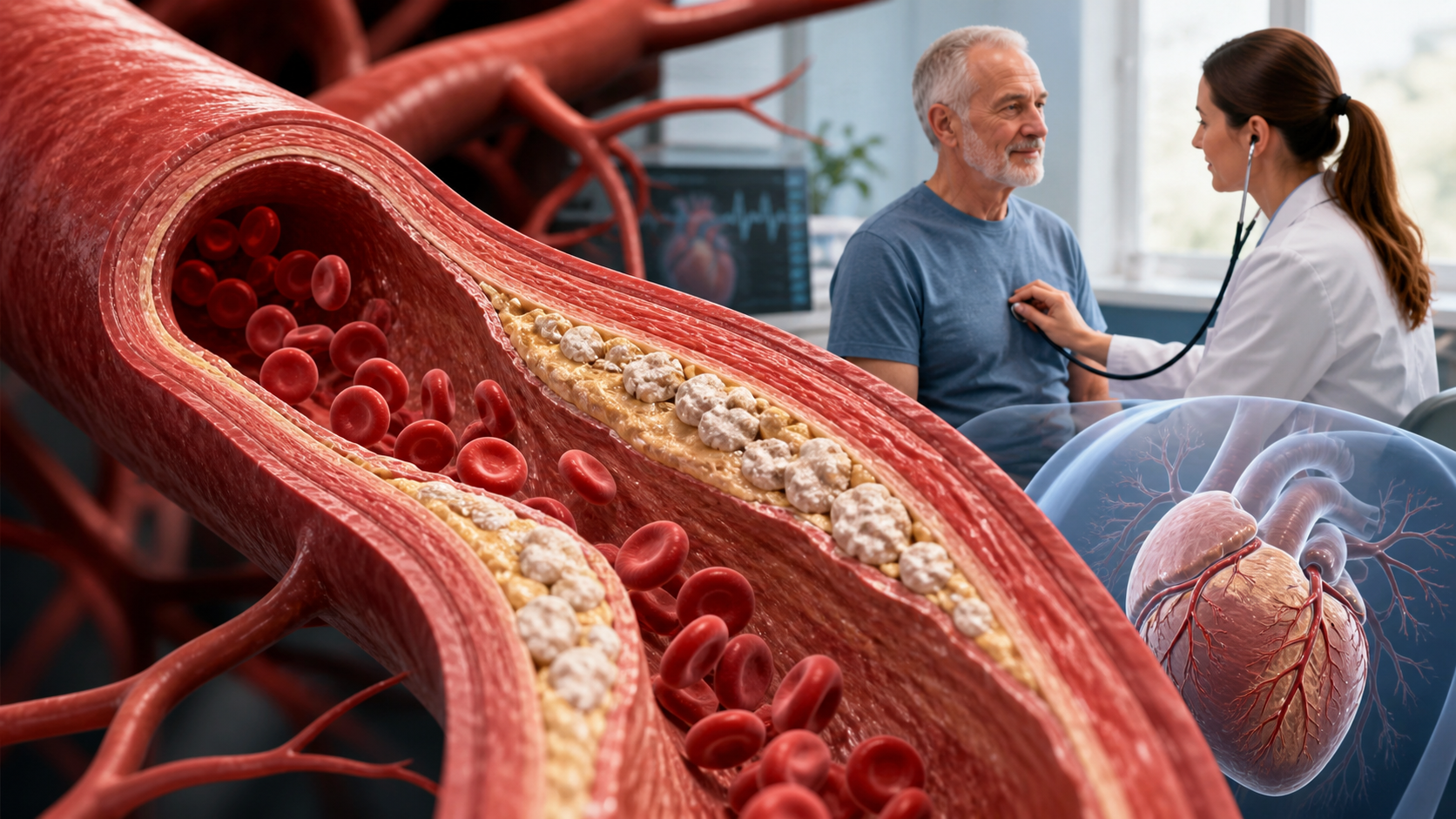
Arterial Calcification and Vascular Aging: Reading the Risk Signals
Arterial calcification can reveal accumulated vascular risk. Learn what calcium scores mean, why calcification develops, and where testing has limits.
10 min read
Arterial Stiffness and Vascular Age: A Longevity Evidence Guide
Understand arterial stiffness vascular age longevity links, key studies, measurement limits, and evidence-based lifestyle implications for healthy aging.
11 min read