
Glymphatic Clearance, Sleep, and Brain Aging: What the Evidence Shows
Sleep appears to influence fluid movement and waste clearance in the brain, but glymphatic science is still evolving. Here is the evidence without the detox hype.
Table of Contents
DISCLAIMER
This article is for informational purposes only and does not constitute medical advice. The statements in this article have not been evaluated by the FDA. The information presented is based on published research and should not be used as a substitute for professional medical guidance. Consult your physician before starting any supplement or health protocol.
The brain has no conventional lymphatic vessels woven through its tissue in the way many other organs do. It still must move water, ions, metabolites, and proteins between interstitial fluid, cerebrospinal fluid, blood vessels, and drainage routes outside the brain. The term glymphatic system describes one influential model for part of that transport.
Sleep entered the story after animal experiments reported greater exchange between cerebrospinal and interstitial fluid during sleep or anesthesia. The result inspired a compelling headline: the sleeping brain takes out its trash. That metaphor is useful, but it can become misleading when turned into a promise that one sleep hack will wash away dementia risk.
What the glymphatic model proposes
In the model, cerebrospinal fluid moves along spaces surrounding arteries, exchanges with fluid inside brain tissue, and exits along perivascular or other drainage routes carrying dissolved material. Astrocytes—support cells whose endfeet surround vessels—express aquaporin-4 water channels that may help organize transport.
This is not a single pump or pipe. Movement can be influenced by arterial pulsation, respiration, pressure gradients, diffusion, vascular tone, and sleep state. Meningeal lymphatic vessels and drainage toward cervical lymph nodes add another layer. Researchers continue to debate the relative contribution of bulk flow, dispersion, and diffusion under different conditions.
That debate does not make the field meaningless. It means “clearance” should be treated as several connected processes rather than a drain that is either open or closed.
Why sleep became central
The landmark 2013 mouse study found that interstitial space increased during sleep and that tracer movement and clearance of beta-amyloid were faster than during wakefulness. Later work connected slow-wave activity, cerebrospinal-fluid oscillations, vascular changes, and autonomic state.
These observations fit broader sleep biology. Sleep supports memory consolidation, synaptic regulation, metabolic control, immune balance, and cardiovascular health. A clearance pathway may be one mechanism within that larger package.
Translating the result to humans is difficult. Human studies rely on MRI tracers, diffusion-based proxies, contrast agents in selected clinical settings, or correlations between sleep measures and fluid signals. None offers the direct, high-resolution view available in animal preparations. An influential 2024 study also reported reduced tracer clearance during sleep and anesthesia in mice, challenging a simple universal rule. Method, tracer size, brain region, and definition of clearance can change the apparent result.
What aging may change
With age, arteries become stiffer, sleep becomes more fragmented, slow-wave sleep often declines, and aquaporin-4 organization around vessels may change. Cardiovascular disease, sleep apnea, inflammation, and neurodegeneration can also alter pressures and fluid pathways. These changes make glymphatic function an attractive candidate mechanism in brain aging.
Association is not proof of direction. Poor sleep could impair transport; early brain disease could disrupt sleep and vascular function; or shared aging processes could affect both. A marker correlated with cognitive decline does not show that increasing that marker will prevent decline.
Researchers are especially interested in beta-amyloid and tau because impaired clearance could contribute to accumulation. Yet production, aggregation, cellular uptake, blood-brain barrier transport, immune activity, and degradation all influence protein burden. Glymphatic flow is not the only control point.
Sleep apnea is a practical priority
The most actionable sleep issue is not choosing a special pillow angle. It is identifying disorders that repeatedly fragment sleep or reduce oxygen. Obstructive sleep apnea is common, often underdiagnosed, and associated with hypertension, cardiovascular disease, daytime impairment, and cognitive concerns.
Loud snoring, witnessed breathing pauses, morning headaches, or severe daytime sleepiness deserve clinical evaluation. Treating apnea has established goals such as improving breathing and sleep continuity. Any benefit to brain-fluid dynamics would be an additional mechanism, not the sole reason for care.
What consumer claims get wrong
Products marketed as “glymphatic boosters” often leap from a tracer study to a guaranteed outcome. A supplement, breathing routine, inversion device, or rigid sleep position may be advertised as opening brain drainage without validated human measurements. Consumer wearables cannot directly observe cerebrospinal-fluid exchange.
Hydration is necessary for health, but drinking excessive water before bed can fragment sleep through repeated urination and can be dangerous in extreme cases. More fluid intake does not mechanically flush the brain. Likewise, sedatives are not equivalent to natural sleep and should never be used to chase a theoretical clearance effect.
A defensible sleep strategy
The evidence supports protecting sleep for many reasons even while glymphatic mechanisms remain unsettled. Keep a consistent sleep opportunity, get daytime light and activity, reduce late-night alcohol, and create a dark, quiet sleeping environment. Address persistent insomnia with evidence-based care such as cognitive behavioral therapy for insomnia when appropriate.
Exercise and vascular-risk management may support the pressure and vessel dynamics that interact with brain fluid movement, but they should be pursued for established benefits. No home routine can verify that clearance increased overnight.
The AgainYoung verdict
Glymphatic research has changed how scientists think about brain housekeeping, sleep, and vascular physiology. It has not produced a consumer detox score or a proven protocol for washing away neurodegenerative proteins. The most honest conclusion is that sleep state, circulation, and brain-fluid transport interact, while the direction and magnitude of those effects remain active research questions.
Prioritize sleep quality because the benefits are broad and well supported. Treat claims of direct glymphatic enhancement as experimental unless human outcome data catch up.
This article is educational and is not medical advice. Seek professional evaluation for persistent sleep problems, breathing pauses, or cognitive symptoms.
Frequently Asked Questions
Does deep sleep detox the brain?
Is side sleeping best for the glymphatic system?
Can a wearable measure glymphatic clearance?
Sources
Stay Updated on Longevity Science
Weekly research digests. No spam, unsubscribe anytime.
Related Articles

Ankle Power and Healthy Aging: The Push-Off That Keeps Walking Efficient
Ankle plantar-flexor power supports walking speed and balance recovery. Learn why push-off changes with age and how strength can be trained safely.
9 min read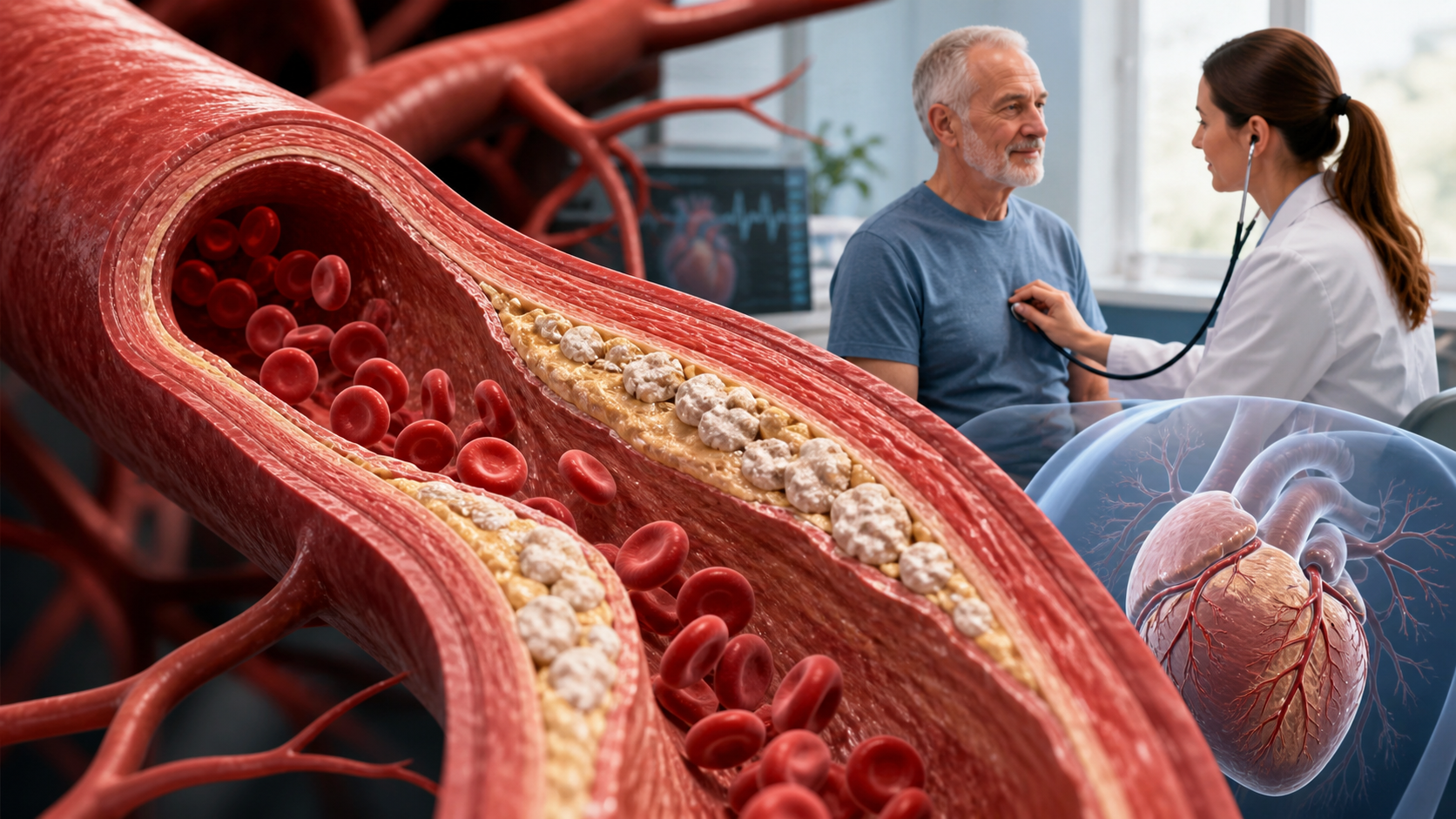
Arterial Calcification and Vascular Aging: Reading the Risk Signals
Arterial calcification can reveal accumulated vascular risk. Learn what calcium scores mean, why calcification develops, and where testing has limits.
10 min read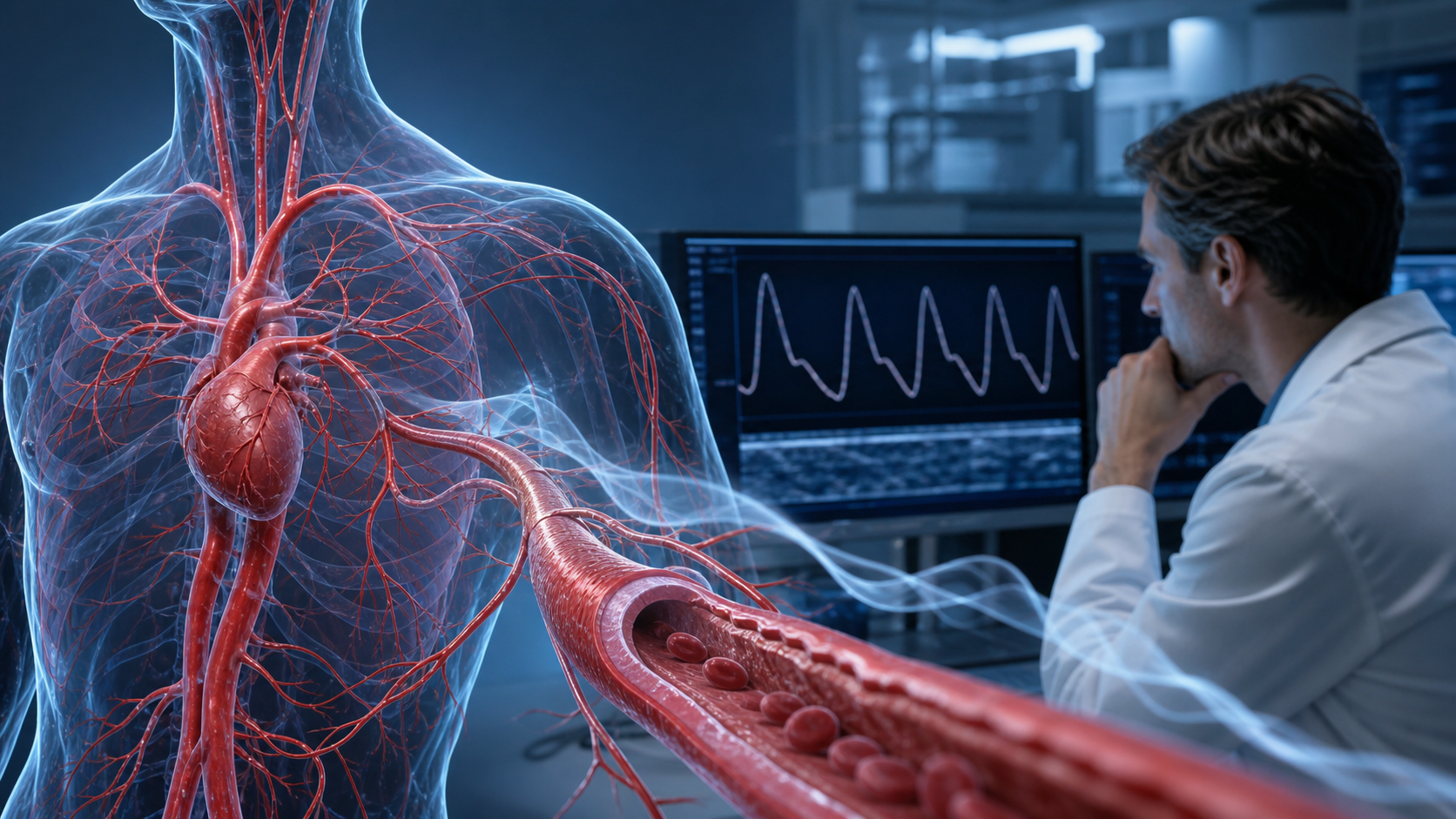
Arterial Stiffness and Vascular Age: A Longevity Evidence Guide
Understand arterial stiffness vascular age longevity links, key studies, measurement limits, and evidence-based lifestyle implications for healthy aging.
11 min read