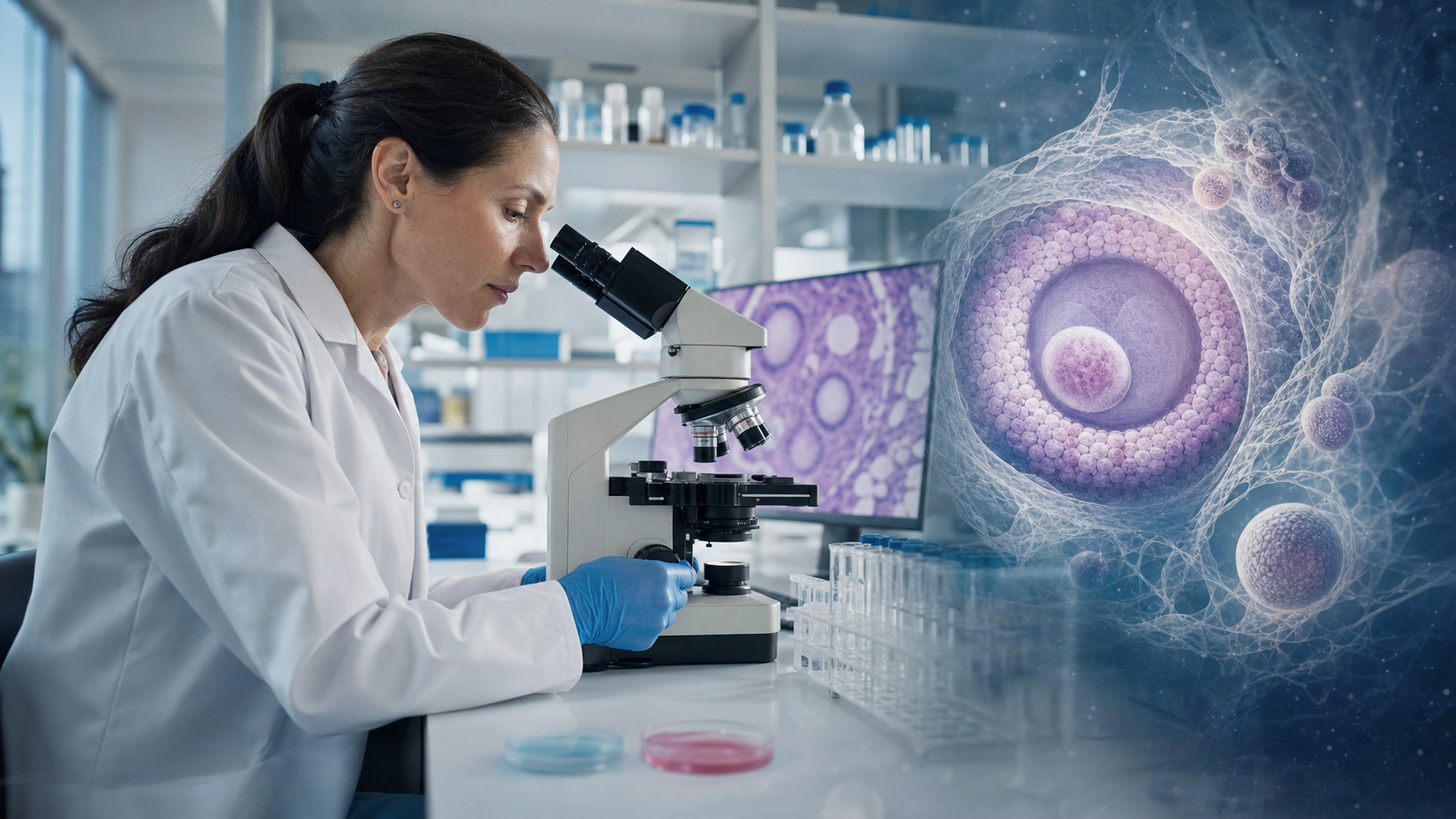
Ovarian Rejuvenation Research: Can We Reverse Reproductive Aging?
New research into ovarian rejuvenation may challenge assumptions about reproductive aging. Explore the science of reversing ovarian decline.
Table of Contents
DISCLAIMER
This article is for informational purposes only and does not constitute medical advice. The statements in this article have not been evaluated by the FDA. The information presented is based on published research and should not be used as a substitute for professional medical guidance. Consult your physician before starting any supplement or health protocol.
The Challenge of Reproductive Aging
Reproductive aging is one of the earliest and most pronounced forms of aging in the human body. While most organ systems maintain functional capacity well into the sixth and seventh decades of life, ovarian function begins declining significantly in the mid-thirties, with a dramatic acceleration after age 38.
This decline involves two interrelated processes: depletion of the ovarian reserve (the pool of remaining eggs) and deterioration in oocyte (egg) quality. Both contribute to reduced fertility, increased pregnancy complications, and eventual menopause, typically occurring around age 51.
For decades, reproductive aging was considered irreversible. Recent research, however, has begun to challenge this assumption, opening new possibilities for extending or restoring ovarian function.
Why Ovarian Aging Matters Beyond Fertility
While the fertility implications of ovarian aging receive the most attention, the consequences extend far beyond reproductive capacity. The ovaries are endocrine organs that produce estrogen, progesterone, and testosterone, hormones with profound effects on:
- Cardiovascular health: Estrogen has vasculoprotective effects, and the post-menopausal decline in estrogen is associated with increased cardiovascular risk.
- Bone density: Estrogen deficiency accelerates bone loss, contributing to osteoporosis risk.
- Brain health: Research suggests ovarian hormones may have neuroprotective properties, and early menopause has been associated with increased cognitive decline risk.
- Metabolic function: Ovarian hormones influence insulin sensitivity, body composition, and lipid metabolism.
Rejuvenating ovarian function could therefore have implications not just for fertility but for overall healthspan in women.
Mitochondrial Dysfunction in Ovarian Aging
The Energy Crisis
Oocytes are among the most mitochondria-rich cells in the body, containing approximately 100,000 mitochondria per cell. This extraordinary mitochondrial content reflects the enormous energy demands of fertilization and early embryonic development.
A 2021 review in Cell Death and Disease detailed how mitochondrial dysfunction is a central driver of ovarian aging. As oocytes age, their mitochondria accumulate damage, produce less ATP, generate more reactive oxygen species, and develop mutations in mitochondrial DNA.
Consequences of Mitochondrial Decline
The mitochondrial deterioration in aging oocytes may lead to:
- Chromosomal segregation errors during cell division (leading to aneuploidy)
- Impaired spindle assembly and organization
- Reduced capacity for DNA repair
- Decreased ability to support early embryonic development
- Increased susceptibility to oxidative damage
This understanding has directed research toward interventions that may restore mitochondrial function in aging oocytes.
NAD+ and Oocyte Quality
The NAD+ Connection
One of the most promising areas of ovarian rejuvenation research involves nicotinamide adenine dinucleotide (NAD+), a coenzyme essential for mitochondrial function and cellular energy production. NAD+ levels decline with age throughout the body, including in the ovaries.
A landmark 2020 study published in Cell Reports demonstrated that treating aged mice with NMN (nicotinamide mononucleotide), a precursor to NAD+, significantly improved oocyte quality. The study showed that NMN treatment:
- Restored NAD+ levels in aged oocytes
- Improved mitochondrial function
- Reduced rates of chromosomal abnormalities
- Enhanced fertility outcomes in aged animals
Translation to Humans
Several clinical studies are now investigating whether NAD+ precursors can improve egg quality in women undergoing assisted reproduction. While results are preliminary, early reports suggest potential improvements in oocyte maturation rates and embryo quality in some patients.
However, researchers caution that mouse reproductive biology differs significantly from human reproductive biology, and the doses used in animal studies may not directly translate to human applications. Controlled clinical trials are essential to determine efficacy and safety.
Platelet-Rich Plasma (PRP) Therapy
How PRP Works
Platelet-rich plasma therapy involves concentrating platelets from a patient’s own blood and injecting them into the ovaries. Platelets contain growth factors and cytokines that may stimulate tissue regeneration, including:
- Platelet-derived growth factor (PDGF)
- Vascular endothelial growth factor (VEGF)
- Transforming growth factor beta (TGF-beta)
- Insulin-like growth factor 1 (IGF-1)
Clinical Evidence
A 2020 study published in the Journal of Assisted Reproduction and Genetics reported on the use of autologous PRP for ovarian rejuvenation in women with diminished ovarian reserve. The researchers observed improvements in hormone levels (AMH, FSH) and reported spontaneous pregnancies in some participants.
However, the evidence base remains limited:
- Most studies have been small, uncontrolled case series
- Results have been inconsistent across different research groups
- The mechanism of action in ovarian tissue is not well understood
- Placebo-controlled trials are still needed to confirm benefits
Safety Considerations
As an autologous therapy (using the patient’s own blood), PRP is generally considered to carry lower immunological risks than treatments using donor materials. However, the procedure does involve ovarian injection, which carries risks including infection, bleeding, and potential damage to ovarian tissue. The long-term effects of PRP injection on ovarian function are unknown.
Stem Cell Approaches
Ovarian Stem Cells
The existence of ovarian stem cells capable of generating new oocytes remains one of the most debated topics in reproductive biology. Traditional teaching held that women are born with a fixed supply of eggs that cannot be replenished. However, some researchers have challenged this dogma, claiming to have identified oogonial stem cells in adult ovarian tissue.
If functional ovarian stem cells do exist, they could potentially be activated or expanded to generate new oocytes. Research in this area has produced conflicting results, and the scientific community remains divided on whether true oogonial stem cells exist in humans.
Mesenchymal Stem Cell Therapy
An alternative approach involves injecting mesenchymal stem cells (MSCs) into the ovaries to promote tissue regeneration. Animal studies have shown that MSC transplantation may improve ovarian function in models of premature ovarian insufficiency, potentially through paracrine signaling rather than direct differentiation into oocytes.
Human clinical trials of MSC therapy for ovarian rejuvenation are in early stages, with preliminary reports suggesting possible improvements in hormone levels and follicular development in some patients.
CoQ10 and Mitochondrial Support
Coenzyme Q10
CoQ10 is a component of the mitochondrial electron transport chain and a potent antioxidant. Given the central role of mitochondrial dysfunction in ovarian aging, CoQ10 supplementation has been investigated as a strategy to improve oocyte quality.
Animal studies have shown that CoQ10 supplementation in aged mice may:
- Improve oocyte mitochondrial function
- Reduce oxidative damage to oocytes
- Decrease rates of aneuploidy
- Improve fertility outcomes
Some clinical studies have reported modest improvements in IVF outcomes with CoQ10 supplementation, though results have been inconsistent and larger trials are needed.
DHEA (Dehydroepiandrosterone)
DHEA supplementation has been widely used in fertility clinics for women with diminished ovarian reserve. Meta-analyses have suggested modest improvements in IVF outcomes, including increased oocyte numbers and pregnancy rates, though the evidence quality is moderate and benefits may be limited to specific patient populations.
Emerging Research Directions
Rapamycin and mTOR Inhibition
Research in mice has suggested that rapamycin, an mTOR inhibitor, may slow ovarian aging by reducing follicle activation and preserving the ovarian reserve. Studies have shown that short-term rapamycin treatment may extend the reproductive lifespan of mice, though translation to humans remains uncertain.
Resveratrol and SIRT1 Activation
Studies have explored whether resveratrol and other SIRT1 activators can improve ovarian function. Research suggests that SIRT1 activation may support mitochondrial biogenesis and reduce oxidative stress in oocytes, though clinical evidence is limited.
Ovarian Tissue Cryopreservation
While not strictly a rejuvenation approach, ovarian tissue cryopreservation allows women to preserve young ovarian tissue for potential future transplantation. This technique has been used successfully to restore fertility after cancer treatment and may have applications for women who wish to extend their reproductive window.
The Hormonal Connection
Hormone Replacement and Ovarian Health
Research suggests that the relationship between hormone therapy and ovarian aging is more complex than previously understood. While hormone replacement therapy does not regenerate ovarian function, maintaining hormonal balance through the menopausal transition may help preserve some of the downstream health benefits normally provided by functioning ovaries.
Anti-Mullerian Hormone (AMH)
AMH has become the primary biomarker for assessing ovarian reserve, and changes in AMH levels are often used as endpoints in ovarian rejuvenation studies. Understanding the limitations of AMH as a measure is important: it reflects the quantity of remaining follicles but does not directly assess oocyte quality, which is equally important for reproductive outcomes.
Practical Considerations
For women interested in ovarian health and fertility preservation, current evidence supports several practical measures:
- Regular physical activity, which research suggests may support ovarian function
- A nutrient-rich diet emphasizing antioxidants and healthy fats
- Avoiding smoking and excessive alcohol, both associated with accelerated ovarian aging
- Considering fertility preservation options if future reproduction is desired
- Discussing CoQ10 and other supplements with a healthcare provider
Experimental ovarian rejuvenation procedures should be approached with caution. While the science is advancing rapidly, most interventions remain unproven, and individuals considering these treatments should seek care from qualified reproductive medicine specialists and ask about available clinical trials.
The field of ovarian rejuvenation represents one of the most dynamic areas of aging research. As our understanding of ovarian biology deepens and new interventions advance through clinical testing, the prospect of meaningfully extending reproductive health may become increasingly realistic. However, as with all emerging medical interventions, patience and rigorous evidence should guide decision-making. Consult your healthcare provider before pursuing any experimental treatments.
Frequently Asked Questions
What is ovarian rejuvenation?
Can ovarian aging be reversed?
Is PRP ovarian rejuvenation effective?
Sources
Stay Updated on Longevity Science
Weekly research digests. No spam, unsubscribe anytime.
Related Articles

Age Reversal Clinical Trials to Watch in 2026
A comprehensive guide to the most important age reversal clinical trials in 2026, from senolytics to epigenetic reprogramming and beyond.
14 min read
Age Reversal Supplements: What Does the Evidence Actually Say?
A critical review of supplements claiming to reverse biological aging, examining the scientific evidence behind NMN, resveratrol, spermidine, and more.
14 min read
Altos Labs Longevity Research: 2026 Progress Update
Altos Labs is one of the best-funded longevity startups. Here is what research suggests about their cellular rejuvenation progress in 2026.
10 min read