In Vivo Reprogramming Trials: Can We Reset Aging Cells Inside the Body?
Discover the latest clinical trials testing in vivo cellular reprogramming to reverse aging. Learn how partial reprogramming works and its safety profile.
Table of Contents
DISCLAIMER
This article is for informational purposes only and does not constitute medical advice. The statements in this article have not been evaluated by the FDA. The information presented is based on published research and should not be used as a substitute for professional medical guidance. Consult your physician before starting any supplement or health protocol.
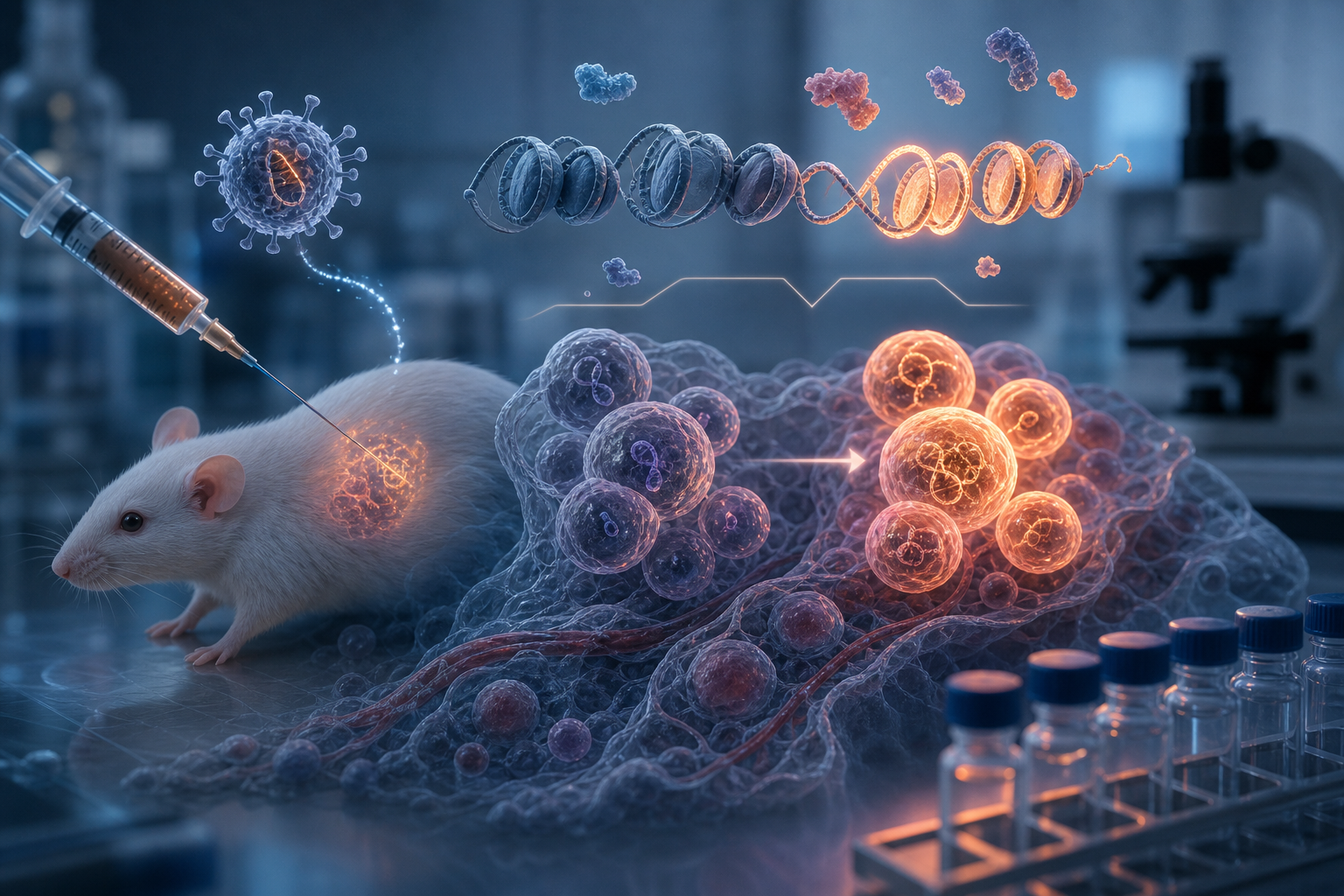
Of all the approaches being explored to combat biological aging, in vivo cellular reprogramming may be the most audacious. The concept is deceptively simple: use molecular tools to reset the epigenetic state of cells within a living organism, rolling back the age-related changes that accumulate over a lifetime without erasing the cell’s identity or function. If successful, this approach could represent a genuine paradigm shift in how we address aging and age-related disease.
The journey from the laboratory discovery that aged cells can be rejuvenated using transcription factors to the first clinical trials testing this approach in humans has been remarkably swift by biomedical standards, driven by extraordinary scientific interest and unprecedented funding. However, the challenges of translating in vivo reprogramming from mouse models to human medicine are formidable, and the safety questions are profound.
The Scientific Foundation
In vivo reprogramming builds upon Shinya Yamanaka’s Nobel Prize-winning discovery that four transcription factors, Oct4, Sox2, Klf4, and c-Myc (collectively known as OSKM or Yamanaka factors), can reprogram differentiated adult cells back to a pluripotent state. This complete reprogramming is clearly undesirable in a living organism, as it would erase cellular identity and potentially cause tumors.
The breakthrough for aging research came with the realization that partial or transient expression of these factors could reset epigenetic markers of aging without fully dedifferentiating cells. This concept of partial reprogramming was first demonstrated in vivo by Juan Carlos Izpisua Belmonte’s laboratory at the Salk Institute in 2016, showing that cyclic expression of OSKM in a mouse model of premature aging (progeria) extended lifespan and ameliorated aging phenotypes.
Subsequent studies have expanded on this foundation. Lu and colleagues demonstrated that expressing just three of the Yamanaka factors (Oct4, Sox2, and Klf4, without c-Myc, the most oncogenic factor) could restore youthful epigenetic patterns and regenerate damaged retinal ganglion cells in aged mice, recovering lost vision (Lu et al., 2020; PMID: 33268865). This landmark study provided powerful evidence that age-related epigenetic changes are not merely markers of aging but may actually drive functional decline, and that reversing them can restore function.
From Animal Studies to Human Trials
The transition from animal research to human clinical trials represents both the most exciting and most challenging phase of in vivo reprogramming research.
Key Animal Study Results
Multiple animal studies have provided the foundation for clinical translation. Browder and colleagues demonstrated that long-term partial reprogramming in physiologically aging mice (not just progeria models) could rejuvenate molecular signatures in multiple tissues, including skin and kidney, without increasing cancer incidence (Browder et al., 2022; PMID: 35236985). This was critically important for establishing safety in the context of normal aging.
Research by Gill and colleagues showed that transient reprogramming of human skin fibroblasts in vitro could reverse epigenetic age by approximately 30 years while maintaining cellular identity and function (Gill et al., 2022; PMID: 35390163). These cells showed rejuvenated transcriptomic profiles and partially restored their ability to repair wounds, suggesting functional rejuvenation rather than merely epigenetic changes.
Current Clinical Trial Landscape
As of 2026, several approaches to in vivo reprogramming are advancing toward or have entered early clinical testing.
Gene therapy delivery of reprogramming factors is the most direct approach but faces significant safety hurdles. Companies including Altos Labs and Turn Biotechnologies are developing sophisticated delivery systems that aim to achieve precisely controlled, transient expression of reprogramming factors in target tissues. AAV (adeno-associated virus) vectors, mRNA delivery via lipid nanoparticles, and small molecule approaches are all being explored.
Small molecule reprogramming represents an alternative that avoids the need for gene therapy entirely. Several research groups have identified chemical cocktails that can partially reprogram cells, potentially offering a more controllable and reversible approach than genetic methods. These small molecule approaches are generally further from clinical translation but may ultimately prove more practical for widespread use.
Tissue-specific approaches are likely to be the first to reach clinical trials, targeting specific organs where the benefits and risks can be more clearly evaluated. The eye, given its accessibility and the success of preclinical vision restoration studies, is a strong candidate for early trials.
Mechanisms of Epigenetic Rejuvenation
Understanding how partial reprogramming achieves rejuvenation is critical for optimizing its safety and efficacy.
During aging, cells accumulate characteristic epigenetic changes: altered DNA methylation patterns, shifted histone modifications, and reorganized chromatin architecture. These changes may drive age-related functional decline by disrupting gene expression programs.
Partial reprogramming appears to selectively reverse these age-associated epigenetic alterations while preserving the cell type-specific epigenetic marks that define cellular identity. The precise mechanisms remain an area of active investigation, but several key processes have been identified.
DNA Methylation Reset: Reprogramming factors appear to selectively demethylate CpG sites that become hypermethylated with age, particularly at gene promoters involved in cell function and stress response. This resetting of the DNA methylation landscape is reflected in younger epigenetic clock readings.
Chromatin Remodeling: Aging is associated with loss of heterochromatin and disorganization of chromatin architecture. Partial reprogramming may help restore proper chromatin organization, potentially improving gene regulation.
Mitochondrial Rejuvenation: Reprogrammed cells often show improved mitochondrial function, including enhanced oxidative phosphorylation and reduced reactive oxygen species production, suggesting that reprogramming can address the mitochondrial dysfunction that accompanies aging.
Safety Considerations and Challenges
The safety profile of in vivo reprogramming is the single most critical factor determining its clinical viability.
Cancer Risk: The most significant concern is that reprogramming factors, particularly c-Myc, are known oncogenes. Full reprogramming creates teratoma-forming pluripotent cells. While partial reprogramming aims to avoid this by limiting the duration and extent of factor expression, the precise boundary between rejuvenation and dangerous dedifferentiation remains poorly defined. Long-term studies in animals have been reassuring but cannot fully predict human cancer risk.
Dosing and Timing: Achieving the correct “dose” of reprogramming, enough to rejuvenate cells but not so much as to erase their identity, is a fundamental challenge. This window may vary between cell types, tissues, and individuals, complicating clinical application.
Delivery Specificity: For in vivo approaches, ensuring that reprogramming factors reach intended target cells without affecting others is critical. Off-target reprogramming could have unpredictable and potentially dangerous consequences.
Irreversibility: Unlike a drug that can be discontinued, gene therapy-based reprogramming approaches may have long-lasting effects that cannot be easily reversed if problems arise.
Immune Responses: AAV vectors and other delivery vehicles can trigger immune reactions, potentially limiting the ability to re-dose or causing inflammatory complications (Chen et al., 2023; PMID: 36882699).
The Road Ahead
The path from current research to approved clinical therapies will likely involve several key milestones.
First, tissue-specific pilot studies in conditions with clear unmet medical needs, such as age-related vision loss or neurodegenerative diseases, will establish the initial safety and efficacy profile in humans. These early trials will provide invaluable data on dosing, delivery, and adverse effects.
Second, improved delivery technologies will be needed to enable precise, controllable, and repeatable administration of reprogramming factors. mRNA-based approaches may offer advantages over gene therapy by providing inherently transient expression.
Third, better biomarkers and monitoring tools will be essential for tracking the effects of reprogramming in real time, allowing clinicians to assess whether cells are being appropriately rejuvenated without dangerous dedifferentiation.
Fourth, regulatory frameworks will need to evolve to accommodate this novel category of therapy. Current regulatory pathways are designed for drugs that treat specific diseases, not for interventions that aim to reverse a fundamental biological process.
Frequently Asked Questions
How close are we to human in vivo reprogramming therapies? The first tissue-specific human trials are anticipated in the late 2020s, likely focusing on the eye or other accessible tissues. Broader systemic reprogramming therapies are considerably further out, likely a decade or more away from clinical availability. The timeline depends heavily on safety data from early trials and on advances in delivery technology.
Is in vivo reprogramming the same as gene therapy? In vivo reprogramming can be delivered via gene therapy vectors (such as AAV), but it can also use non-genetic approaches such as mRNA or small molecules. The key distinction is the goal: rather than replacing a defective gene, reprogramming aims to transiently activate transcription factors that reset the cell’s epigenetic state. Some approaches may not involve genetic modification at all.
What are the biggest risks of cellular reprogramming? The primary risks include potential cancer formation from excessive reprogramming, loss of cell identity leading to tissue dysfunction, immune reactions to delivery vehicles, and unknown long-term effects. Animal studies have been largely reassuring regarding cancer risk with properly controlled partial reprogramming, but human safety data are still minimal. Any individual considering experimental reprogramming therapies should do so only within properly regulated clinical trials.
Sources
- In vivo partial reprogramming alters age-associated molecular changes during physiological aging in mice(2022)
- Reprogramming to recover youthful epigenetic information and restore vision(2020)
- Multi-omic rejuvenation of human cells by maturation phase transient reprogramming(2022)
- Cellular reprogramming and aging: current evidence and emerging strategies(2023)
Stay Updated on Longevity Science
Weekly research digests. No spam, unsubscribe anytime.
Related Articles

Age Reversal Clinical Trials to Watch in 2026
A comprehensive guide to the most important age reversal clinical trials in 2026, from senolytics to epigenetic reprogramming and beyond.
14 min read
Age Reversal Supplements: What Does the Evidence Actually Say?
A critical review of supplements claiming to reverse biological aging, examining the scientific evidence behind NMN, resveratrol, spermidine, and more.
14 min read
Altos Labs Longevity Research: 2026 Progress Update
Altos Labs is one of the best-funded longevity startups. Here is what research suggests about their cellular rejuvenation progress in 2026.
10 min read