Autophagy Induction Methods: Evidence-Based Ways to Activate Cellular Cleanup
Learn proven and emerging methods to induce autophagy, the cellular recycling process linked to longevity. From fasting to exercise to supplements.
Table of Contents
DISCLAIMER
This article is for informational purposes only and does not constitute medical advice. The statements in this article have not been evaluated by the FDA. The information presented is based on published research and should not be used as a substitute for professional medical guidance. Consult your physician before starting any supplement or health protocol.
Autophagy, derived from the Greek words for “self-eating,” is one of the most fundamental cellular maintenance processes in biology. This sophisticated recycling system enables cells to break down and repurpose damaged proteins, dysfunctional organelles, and other cellular debris that accumulate with age. The 2016 Nobel Prize in Physiology or Medicine, awarded to Yoshinori Ohsumi for his discoveries of autophagy mechanisms, underscored the process’s critical importance to cellular health.
As organisms age, autophagy efficiency declines, contributing to the accumulation of cellular damage that characterizes the aging process (Aman et al., 2021; PMID: 34272041). This decline has been linked to virtually every hallmark of aging, from mitochondrial dysfunction to proteostasis loss to the accumulation of senescent cells. Consequently, strategies to enhance or restore autophagy have become a central focus of longevity research.
Understanding how to effectively stimulate autophagy through evidence-based methods may represent one of the most actionable strategies for supporting healthy aging.
How Autophagy Works: A Brief Overview
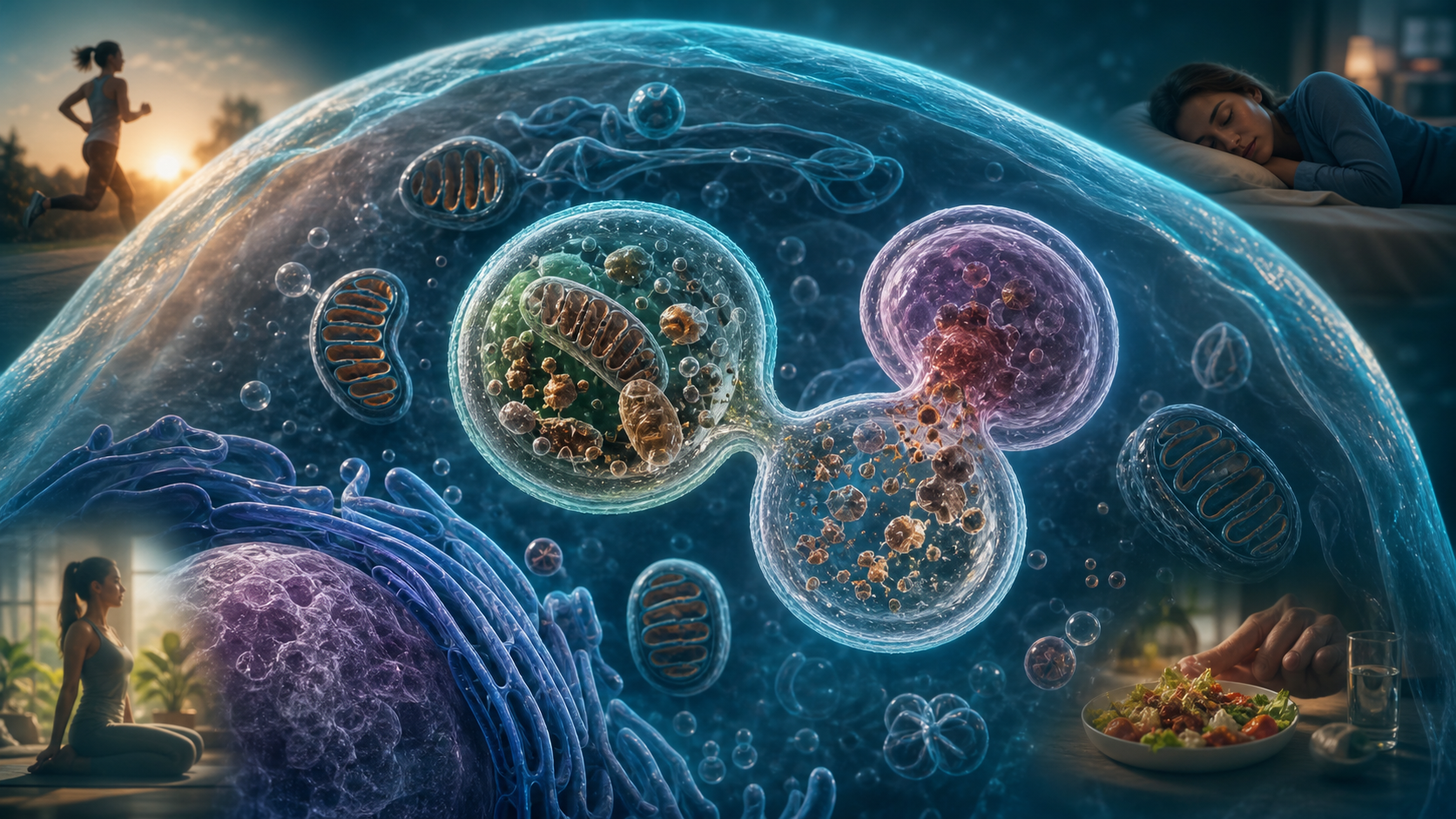
Autophagy operates through a carefully orchestrated series of steps. When a cell detects nutrient scarcity, accumulated damage, or receives other stress signals, it initiates the formation of a double-membraned structure called a phagophore. This structure engulfs damaged cellular components, forming a vesicle called an autophagosome. The autophagosome then fuses with a lysosome, an acidic compartment containing digestive enzymes that break down the captured material into basic building blocks, amino acids, fatty acids, and nucleotides, which the cell can then reuse.
The process is tightly regulated by two major nutrient-sensing pathways that act in opposition. mTOR (mechanistic target of rapamycin) serves as a master growth signal that inhibits autophagy when nutrients and growth factors are abundant. AMPK (AMP-activated protein kinase) acts as an energy sensor that activates autophagy when cellular energy levels are low. Most autophagy induction strategies work by suppressing mTOR, activating AMPK, or both.
Fasting and Caloric Restriction
Fasting is perhaps the most potent and well-documented natural inducer of autophagy. When food intake ceases, falling insulin and nutrient levels trigger mTOR inhibition and AMPK activation, creating a powerful autophagy-promoting cellular environment.
Time Course of Fasting-Induced Autophagy
Animal studies suggest that autophagy begins to increase significantly after approximately 24 to 48 hours of fasting in mice, though the exact timing in humans remains less well characterized. Studies using liver biopsy samples and blood biomarkers suggest that autophagy markers begin rising in humans after approximately 24 to 36 hours of fasting, though this likely varies by tissue and individual (Alirezaei et al., 2010; PMID: 20534972).
Intermittent fasting protocols, such as 16:8 time-restricted eating or alternate-day fasting, may provide a milder but more sustainable autophagy stimulus. The evidence suggests these approaches can activate autophagy-related pathways, though likely to a lesser degree than prolonged fasting.
Caloric Restriction
Long-term caloric restriction (typically 20-30% below ad libitum intake) is the most consistently life-extending intervention across species and appears to maintain elevated autophagy as one of its key mechanisms. However, adherence to sustained caloric restriction is challenging for most people, and excessive restriction carries risks of malnutrition, bone loss, and immune impairment.
Fasting-Mimicking Diet
Developed by Valter Longo’s laboratory, the fasting-mimicking diet (FMD) provides a low-calorie, low-protein, plant-based regimen for five consecutive days per month. This approach aims to trigger fasting-like metabolic responses, including autophagy activation, while allowing limited food intake. Clinical trials have shown that periodic FMD cycles may reduce biomarkers of aging and disease risk.
Exercise
Physical exercise is a robust and accessible autophagy inducer. Exercise creates the cellular conditions that favor autophagy: energy depletion activates AMPK, mechanical stress triggers quality control pathways, and metabolic demands increase the need for cellular recycling (He et al., 2018; PMID: 30459365).
Types of Exercise and Autophagy
Both aerobic exercise and resistance training appear to induce autophagy, though through somewhat different mechanisms. Endurance exercise may be particularly effective at inducing autophagy in skeletal muscle and cardiac tissue, while resistance training may preferentially stimulate selective autophagy of damaged mitochondria (mitophagy).
High-intensity interval training (HIIT) may offer an especially potent autophagy stimulus due to the acute energy depletion and metabolic stress it creates. Studies in humans have shown increased autophagy markers in skeletal muscle following acute bouts of exercise, with the magnitude of response correlating with exercise intensity and duration.
The optimal exercise prescription for autophagy induction remains to be defined, but current evidence suggests that a combination of regular aerobic exercise (at least 150 minutes per week of moderate intensity or 75 minutes of vigorous intensity) and resistance training (2-3 sessions per week) provides a solid foundation.
Pharmacological and Supplement Approaches
Several compounds have been identified as potential autophagy inducers, though the evidence varies significantly in strength.
Rapamycin and Rapalogs
Rapamycin, an mTOR inhibitor originally developed as an immunosuppressant, is the most potent pharmacological autophagy inducer known. It consistently extends lifespan in multiple animal models. However, its immunosuppressive properties and other side effects limit its suitability as a general longevity intervention. Low-dose, intermittent rapamycin protocols are being explored to balance benefits and risks, but this remains an area of active research and should only be pursued under medical supervision.
Spermidine
Spermidine is a naturally occurring polyamine that induces autophagy through mechanisms that partially overlap with those of caloric restriction (Morselli et al., 2014; PMID: 24912154). It has extended lifespan in yeast, worms, flies, and mice. Human epidemiological studies suggest that higher dietary spermidine intake is associated with reduced mortality. Spermidine-rich foods include wheat germ, aged cheese, mushrooms, soybeans, and legumes. Supplemental spermidine is also available, though optimal dosing for autophagy induction in humans has not been established.
Resveratrol and Other Polyphenols
Resveratrol may activate autophagy through SIRT1-mediated deacetylation of autophagy proteins. Green tea polyphenols (particularly EGCG) and curcumin have also shown autophagy-inducing properties in cell and animal studies. However, the bioavailability of these compounds is generally poor, and it remains unclear whether the doses achievable through oral supplementation are sufficient to meaningfully enhance autophagy in human tissues.
Metformin
The diabetes drug metformin activates AMPK and has been shown to induce autophagy in multiple cell types. The ongoing TAME (Targeting Aging with Metformin) trial is evaluating whether metformin can delay age-related diseases in healthy older adults, though the trial is not specifically measuring autophagy as an endpoint.
Coffee and Caffeine
Intriguingly, both caffeinated and decaffeinated coffee have been shown to induce autophagy in mouse liver, heart, and muscle tissues. The polyphenols in coffee, rather than caffeine alone, appear to contribute to this effect. While direct evidence in humans is limited, epidemiological data associating moderate coffee consumption with reduced all-cause mortality are consistent with this mechanism.
Lifestyle Factors That May Support Autophagy
Sleep
Autophagy follows circadian rhythms, with some evidence suggesting increased activity during sleep. Sleep deprivation has been associated with impaired autophagy in animal models. Maintaining regular sleep patterns and adequate sleep duration (7-9 hours for most adults) may support natural autophagy cycling.
Heat and Cold Exposure
Both heat stress (sauna use) and cold exposure (cold water immersion) have been associated with activation of cellular stress response pathways that may include autophagy. These hormetic stressors may provide modest autophagy stimulation as part of broader cellular resilience-building responses.
Monitoring Autophagy: Current Limitations
One of the significant challenges in translating autophagy research into practical recommendations is the difficulty of measuring autophagy in living humans. Unlike blood glucose or cholesterol, there is no simple clinical test for autophagy activity. Researchers typically rely on measuring autophagy-related proteins in tissue biopsies or blood samples, but these markers are imperfect proxies for actual autophagic activity. This measurement challenge means that most practical recommendations are based on interventions shown to activate autophagy in controlled studies rather than on real-time monitoring.
Practical Recommendations
Based on the current evidence, a multi-faceted approach to supporting autophagy may include regular time-restricted eating or periodic longer fasts (under medical guidance), consistent exercise combining aerobic and resistance training, adequate sleep with consistent timing, a diet rich in natural autophagy-promoting compounds (polyphenols, spermidine), and avoidance of constant snacking, which may chronically suppress autophagy through persistent mTOR activation.
Frequently Asked Questions
How long do you need to fast to activate autophagy? Based on animal and limited human research, autophagy may begin to increase meaningfully after approximately 18 to 24 hours of fasting, though this varies by tissue and individual. Time-restricted eating (such as a 16:8 protocol) may provide mild autophagy stimulation, while more pronounced effects likely require longer fasting periods. Extended fasting should be undertaken with medical guidance, particularly for individuals with existing health conditions.
Can you have too much autophagy? Yes. While insufficient autophagy is associated with aging and disease, excessive autophagy can be detrimental, potentially leading to cell death through a process called autosis. The body has evolved sophisticated regulatory mechanisms to maintain autophagy within appropriate bounds. Extreme fasting, excessive exercise, or pharmacological over-stimulation of autophagy could theoretically be harmful, though this is more of a concern with potent drugs than with lifestyle interventions.
Do autophagy supplements actually work? Compounds like spermidine, resveratrol, and EGCG have demonstrated autophagy-inducing effects in laboratory and animal studies. However, the degree to which oral supplementation at standard doses translates into meaningful autophagy enhancement in human tissues remains an open question. These supplements may provide modest support for autophagy but should be viewed as complementary to the more potent stimuli of fasting and exercise rather than as standalone solutions.
Sources
Stay Updated on Longevity Science
Weekly research digests. No spam, unsubscribe anytime.
Related Articles

Age Reversal Clinical Trials to Watch in 2026
A comprehensive guide to the most important age reversal clinical trials in 2026, from senolytics to epigenetic reprogramming and beyond.
14 min read
Age Reversal Supplements: What Does the Evidence Actually Say?
A critical review of supplements claiming to reverse biological aging, examining the scientific evidence behind NMN, resveratrol, spermidine, and more.
14 min read
Altos Labs Longevity Research: 2026 Progress Update
Altos Labs is one of the best-funded longevity startups. Here is what research suggests about their cellular rejuvenation progress in 2026.
10 min read