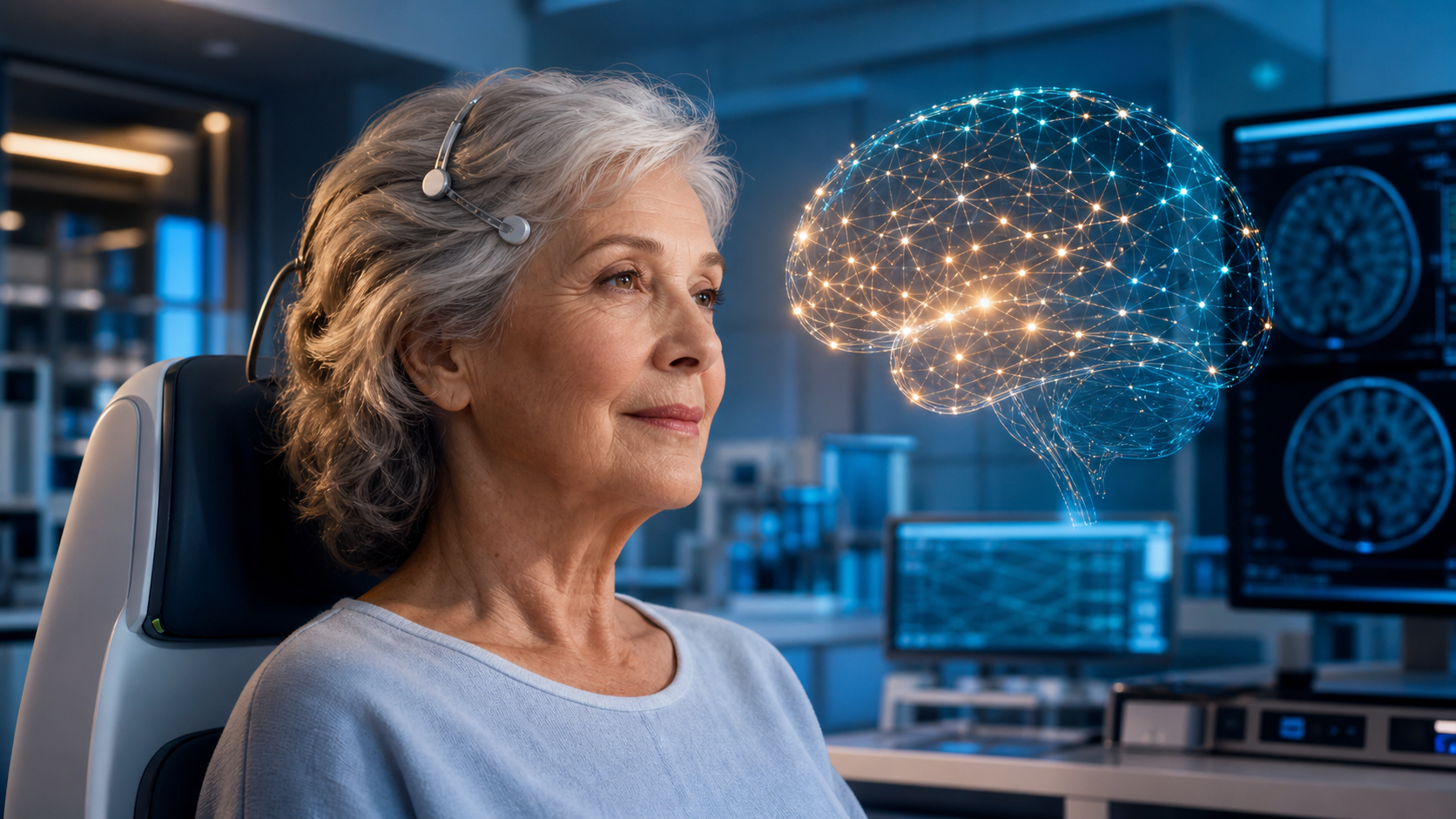
Brain-Computer Interfaces and Aging: Can Neural Tech Restore Cognition?
Explore how brain-computer interfaces may help address age-related cognitive decline, restore memory, and enhance neural communication in the aging brain.
Table of Contents
DISCLAIMER
This article is for informational purposes only and does not constitute medical advice. The statements in this article have not been evaluated by the FDA. The information presented is based on published research and should not be used as a substitute for professional medical guidance. Consult your physician before starting any supplement or health protocol.
As the global population ages, cognitive decline has become one of the most feared consequences of growing older. Memory loss, slower information processing, difficulty with attention, and ultimately neurodegenerative diseases affect quality of life more profoundly than almost any other aspect of aging. While pharmaceutical and lifestyle approaches to brain aging have shown modest benefits, a fundamentally different technological approach is emerging: brain-computer interfaces (BCIs) that directly interface with the neural circuits of the aging brain.
BCIs, devices that establish a direct communication pathway between the brain and external technology, were initially developed for paralysis and severe neurological injuries. But researchers and companies are increasingly exploring their potential to address age-related cognitive decline, from enhancing memory function to restoring lost neural connectivity (Shanechi, 2019; PMID: 33143593).
Types of Brain-Computer Interfaces
Invasive BCIs
Invasive BCIs involve electrodes implanted directly into brain tissue or on the brain surface. They offer the highest signal quality and spatial resolution but require neurosurgery and carry associated risks.
Intracortical Arrays: Devices like the Utah Array or Neuralink’s N1 chip consist of arrays of tiny electrodes inserted into the cortex. These can record from individual neurons and provide highly detailed neural data. Neuralink’s device, which received FDA breakthrough device designation, uses flexible electrode threads and a robotic insertion system designed to minimize tissue damage.
Electrocorticography (ECoG): Electrode grids placed on the brain surface (beneath the skull but above the cortex) offer a compromise between invasive and non-invasive approaches, providing better signal quality than scalp recordings without penetrating brain tissue.
Non-Invasive BCIs
Non-invasive BCIs use sensors on the scalp or other external locations to detect brain activity. They are safer and more accessible but provide lower signal quality.
EEG-Based BCIs: Electroencephalography detects electrical activity through scalp electrodes. While signal quality is limited, EEG-based BCIs are safe, affordable, and widely available. Applications include neurofeedback training and cognitive rehabilitation.
fNIRS-Based BCIs: Functional near-infrared spectroscopy measures brain activity through changes in blood oxygenation. It can be deployed in wearable form factors and is being explored for cognitive monitoring and neurofeedback.
BCIs for Age-Related Cognitive Decline
Memory Enhancement
Perhaps the most exciting application of BCIs for aging is memory restoration and enhancement. Theodore Berger’s pioneering work at the University of Southern California developed a “memory prosthesis” that records neural patterns during memory encoding and replays them during recall, essentially creating an artificial memory aid (Hampson et al., 2018; PMID: 29258362).
In human studies, this hippocampal memory prosthesis improved memory performance by 15-25% in patients with epilepsy. The concept involves recording the neural patterns that the hippocampus generates when successfully encoding memories, using computational models to predict the correct output patterns, and stimulating the hippocampus with these predicted patterns to enhance memory formation and retrieval.
For aging, where hippocampal function progressively declines, such a prosthesis could potentially compensate for the natural deterioration of memory circuits.
Cognitive Rehabilitation
Non-invasive BCIs are being used for cognitive rehabilitation in older adults (Carvalho et al., 2020; PMID: 32132606). Neurofeedback training, where individuals learn to modulate their brain activity patterns using real-time BCI feedback, has shown promise for improving attention, working memory, and executive function in older adults.
Specific applications include training to enhance theta/gamma coupling (associated with memory encoding), strengthening alpha rhythm regulation (associated with attention control), and improving prefrontal cortex activation patterns (associated with executive function).
Communication Restoration
For individuals with severe neurodegenerative diseases who lose the ability to communicate, BCIs can provide an alternative communication pathway. By decoding intended speech or movement from brain signals, BCIs can restore the ability to interact with the world. Recent advances have demonstrated the ability to decode speech from brain activity at rates approaching natural conversation.
Challenges Specific to the Aging Brain
Applying BCIs to the aging brain presents unique challenges. The aging brain undergoes physical changes (atrophy, white matter loss, amyloid deposition) that may affect signal quality and electrode placement. Neural plasticity, the brain’s ability to adapt to new interfaces, may be reduced in older adults. Older adults may have comorbidities (cardiovascular disease, diabetes) that affect surgical candidacy for invasive BCIs. The blood-brain barrier may respond differently to implanted devices in aged tissue. And the ethical considerations of cognitive enhancement in the elderly, including questions of identity, autonomy, and equity, require careful navigation.
Current State of Technology
As of 2026, BCI technology has advanced significantly but remains largely in the research and early clinical trial phase for aging applications. Neuralink has demonstrated its N1 device in human subjects, primarily focused on restoring motor function in paralyzed individuals. Other companies and academic groups are advancing both invasive and non-invasive approaches. The memory prosthesis concept has shown proof-of-concept in human subjects. And consumer-grade EEG devices for neurofeedback are commercially available, though their effectiveness for cognitive aging remains debated.
Ethical Considerations
The application of BCIs to cognitive aging raises profound ethical questions. These include issues of access and equity (will cognitive enhancement be available only to the wealthy?), identity and authenticity (is memory augmented by a device still “my” memory?), privacy (brain data represents perhaps the most intimate personal information possible), informed consent (particularly challenging for individuals with cognitive impairment), and the line between treatment and enhancement (restoring lost function versus enhancing beyond normal capacity).
Frequently Asked Questions
Can brain-computer interfaces cure Alzheimer’s disease? No. BCIs cannot address the underlying pathology of Alzheimer’s disease (amyloid plaques, tau tangles, neuronal loss). However, they may potentially compensate for some of the functional consequences, particularly memory impairment, by augmenting or bypassing damaged neural circuits. BCIs are best viewed as a compensatory technology rather than a curative treatment. Combining BCIs with disease-modifying therapies could potentially provide both pathological treatment and functional compensation.
Are non-invasive BCIs effective for cognitive aging? Non-invasive approaches, particularly neurofeedback training, have shown modest improvements in attention, working memory, and executive function in older adults in some studies. However, the evidence is mixed, effect sizes are generally small, and it is unclear whether benefits persist after training ends. More rigorous, large-scale trials are needed. Consumer-grade neurofeedback devices should be viewed with appropriate skepticism regarding their anti-aging claims.
When will memory prostheses be available for aging-related memory loss? The hippocampal memory prosthesis concept has been demonstrated in human subjects with epilepsy, showing proof-of-concept for memory enhancement. However, translating this to a clinical product for age-related memory decline faces significant challenges, including the need for invasive brain surgery, individual variability in hippocampal circuits, and long-term biocompatibility concerns. Optimistic estimates suggest that a clinical memory prosthesis for select patients could emerge in the early 2030s, but widespread availability for general aging-related memory support is likely further out.
Sources
Stay Updated on Longevity Science
Weekly research digests. No spam, unsubscribe anytime.
Related Articles
3D Bioprinting for Aging: Can We Print Replacement Organs and Tissues?
Explore how 3D bioprinting may address age-related organ failure by creating functional replacement tissues. Review current capabilities and future prospects.
12 min read
AI Diagnostics for Aging: Detecting Early Signs of Biological Decline
Learn how AI-powered diagnostic tools detect early aging markers from medical images, blood tests, and wearable data to enable proactive longevity interventions.
12 min read
AI Drug Discovery for Longevity: What Research Is Coming
How artificial intelligence is accelerating longevity drug discovery, from target identification to clinical trial design, and what it means for aging research.
13 min read