
AI-Powered Longevity Drug Discovery: Machine Learning Meets Anti-Aging
Explore how AI is transforming longevity drug discovery in 2026, from target identification to clinical trial design and geroprotector screening.
Table of Contents
DISCLAIMER
This article is for informational purposes only and does not constitute medical advice. The statements in this article have not been evaluated by the FDA. The information presented is based on published research and should not be used as a substitute for professional medical guidance. Consult your physician before starting any supplement or health protocol.
A Revolution in Anti-Aging Research
Traditional drug discovery is slow, expensive, and has a high failure rate. The average drug takes over a decade to move from initial discovery to market approval, at a cost exceeding two billion dollars. For longevity research, these timelines are particularly challenging because aging is a slow process that is difficult to study in conventional clinical trial frameworks.
Artificial intelligence is beginning to transform this landscape. Machine learning algorithms can analyze vast datasets, identify patterns invisible to human researchers, design novel molecules, and predict drug behavior — all at speeds that may compress years of traditional research into months. In the context of longevity, AI may be the technology that finally accelerates the pace of anti-aging drug discovery to match the urgency of the aging population.
How AI Is Being Applied to Longevity Research
Target Identification
The first step in drug discovery is identifying biological targets that, when modulated, may influence aging. AI excels at this task by analyzing massive multi-omics datasets:
Genomics: Machine learning models can analyze genome-wide association studies and identify genetic variants associated with longevity or accelerated aging. By examining the genomes of centenarians and comparing them to average-lifespan populations, AI may identify novel targets for intervention.
Transcriptomics: AI can analyze gene expression data from tissues at different ages to identify pathways that change with aging and might be targetable. These analyses can reveal networks of gene expression changes that would be impossible to identify manually.
Proteomics: Machine learning can identify age-related changes in protein levels and modifications, potentially revealing new drug targets for protein-level interventions.
Metabolomics: AI analysis of metabolic profiles may identify metabolic pathways that shift with age and could be modulated to promote healthier aging.
Virtual Screening
Once targets are identified, AI can screen millions of chemical compounds to find those most likely to interact with the target in beneficial ways:
- Deep learning models trained on molecular structure-activity data can predict binding affinity and selectivity for aging-relevant targets
- Generative AI can design entirely novel molecules optimized for desired properties
- Reinforcement learning can iteratively refine molecular candidates based on multiple optimization criteria simultaneously
This virtual screening approach may reduce the time and cost of the initial screening phase from years to weeks.
Biomarker Discovery
AI is proving valuable for identifying and validating biomarkers of aging — measurable indicators that can serve as surrogate endpoints in clinical trials:
- Epigenetic clock development: Machine learning is central to building and refining epigenetic age predictors from DNA methylation data
- Blood biomarker panels: AI can identify combinations of blood markers that predict biological age more accurately than individual markers
- Imaging biomarkers: Deep learning can extract aging information from medical images, including retinal scans, facial photographs, and brain MRIs
- Digital biomarkers: AI can analyze wearable device data to detect aging-related patterns in movement, sleep, and physiological responses
Clinical Trial Optimization
AI may help overcome one of the biggest challenges in longevity clinical trials — the long timescales typically needed to observe aging outcomes:
- Patient selection: AI can identify individuals most likely to benefit from or respond to a particular intervention, improving trial efficiency
- Surrogate endpoint validation: Machine learning can help establish biomarker-based endpoints that predict long-term aging outcomes from shorter-term measurements
- Adaptive trial designs: AI-powered adaptive designs can modify trial parameters in real-time based on accumulating data
- Synthetic control arms: AI models trained on historical data may reduce the need for large control groups
Leading AI-Longevity Companies
Insilico Medicine
Insilico Medicine has emerged as a pioneer in applying AI to aging and drug discovery. The company has:
- Developed AI platforms for target identification, drug design, and clinical trial prediction
- Advanced AI-discovered drug candidates into clinical trials for fibrosis and other conditions
- Published research on using AI to identify potential geroprotective compounds
- Developed aging.ai, a deep learning tool for estimating biological age from blood tests
Calico (Alphabet)
Google’s longevity-focused subsidiary Calico employs machine learning alongside traditional biology to study aging:
- Uses computational approaches to analyze large biological datasets
- Applies AI to understand the genetics of lifespan in model organisms
- Leverages Google’s computing infrastructure for massive data analysis
- Collaborates with pharmaceutical companies on drug development
Additional Players
Numerous other companies are working at the AI-longevity intersection:
- BioAge Labs: Uses human longitudinal data and AI to discover aging targets
- Deep Longevity: Develops AI-based aging clocks and longevity predictors
- Gero: Applies physics-inspired AI to model aging dynamics
- Juvenescence: Uses AI-driven approaches in their longevity drug pipeline
AI-Driven Discoveries
Drug Repurposing
One of the most immediately impactful applications of AI in longevity is drug repurposing — identifying existing approved drugs that may have anti-aging properties:
- AI models have identified potential geroprotective activity in drugs originally developed for other conditions
- Machine learning analysis of electronic health records has revealed associations between certain medications and reduced aging-related outcomes
- Computational screening of drug databases against aging-related targets has generated candidates for further investigation
Drug repurposing offers a significant advantage: because these drugs already have established safety profiles, they may be tested for anti-aging effects more quickly and cheaply than novel compounds.
Novel Compound Design
Generative AI has enabled the design of entirely new molecules with potential anti-aging properties:
- AI systems can design molecules that selectively target specific aging pathways
- Multi-objective optimization can balance potency, selectivity, safety, and drug-like properties simultaneously
- AI-designed molecules can incorporate structural features that improve bioavailability and reduce toxicity
Combination Therapy Prediction
Aging is a multi-pathway process, and effective interventions may require addressing multiple pathways simultaneously. AI is well-suited to predicting synergistic drug combinations:
- Machine learning can model complex interactions between multiple drugs
- AI can identify combinations that are more effective than individual compounds
- Computational approaches can predict potential adverse interactions before laboratory testing
Challenges and Limitations
Data Quality and Availability
AI models are only as good as the data they are trained on. Longevity research faces specific data challenges:
- Long-lived cohort studies with comprehensive biomarker data are rare
- Aging data is often fragmented across different institutions and formats
- Human lifespan data inherently takes decades to accumulate
- Bias in training data may lead to models that do not generalize across populations
Validation Gap
While AI can generate predictions rapidly, validating those predictions in biological systems remains slow:
- Computational predictions still need experimental confirmation
- Animal models may not accurately predict human responses
- The long timescales of aging make validation particularly challenging
Interpretability
Many AI models, particularly deep learning systems, operate as black boxes, making it difficult to understand why they make specific predictions. In drug discovery, understanding the mechanistic basis for a prediction is important for safety and efficacy assessment.
Regulatory Considerations
The integration of AI into drug development raises regulatory questions:
- How should AI-generated evidence be evaluated by regulatory agencies?
- What validation standards are appropriate for AI-predicted outcomes?
- How should AI-designed clinical trials be assessed?
The Future Landscape
The convergence of AI and longevity research is likely to accelerate in coming years:
- Foundation models for biology: Large language models trained on biological data may provide more powerful platforms for aging research
- Real-time biomarker monitoring: Continuous data from wearables and implantable sensors may enable AI to track aging in real-time
- Personalized interventions: AI may enable individualized anti-aging protocols based on personal biological data
- Closed-loop systems: AI systems that design, test, and refine interventions with minimal human involvement may dramatically accelerate the discovery cycle
The Bottom Line
AI represents a potentially transformative tool for longevity drug discovery, offering the ability to analyze complex aging biology, identify novel therapeutic targets, design optimized drug candidates, and accelerate clinical development. While significant challenges remain, the pace of progress suggests that AI-powered approaches may substantially shorten the timeline from aging research discoveries to available interventions.
The field is still in its early stages, and many AI-generated predictions have yet to be validated in clinical settings. However, the combination of rapidly improving AI capabilities and growing biological understanding of aging creates an increasingly powerful engine for anti-aging drug discovery.
Frequently Asked Questions
How is AI being used to find anti-aging drugs?
Which companies are using AI for longevity drug discovery?
Can AI predict which existing drugs might slow aging?
Sources
Stay Updated on Longevity Science
Weekly research digests. No spam, unsubscribe anytime.
Related Articles
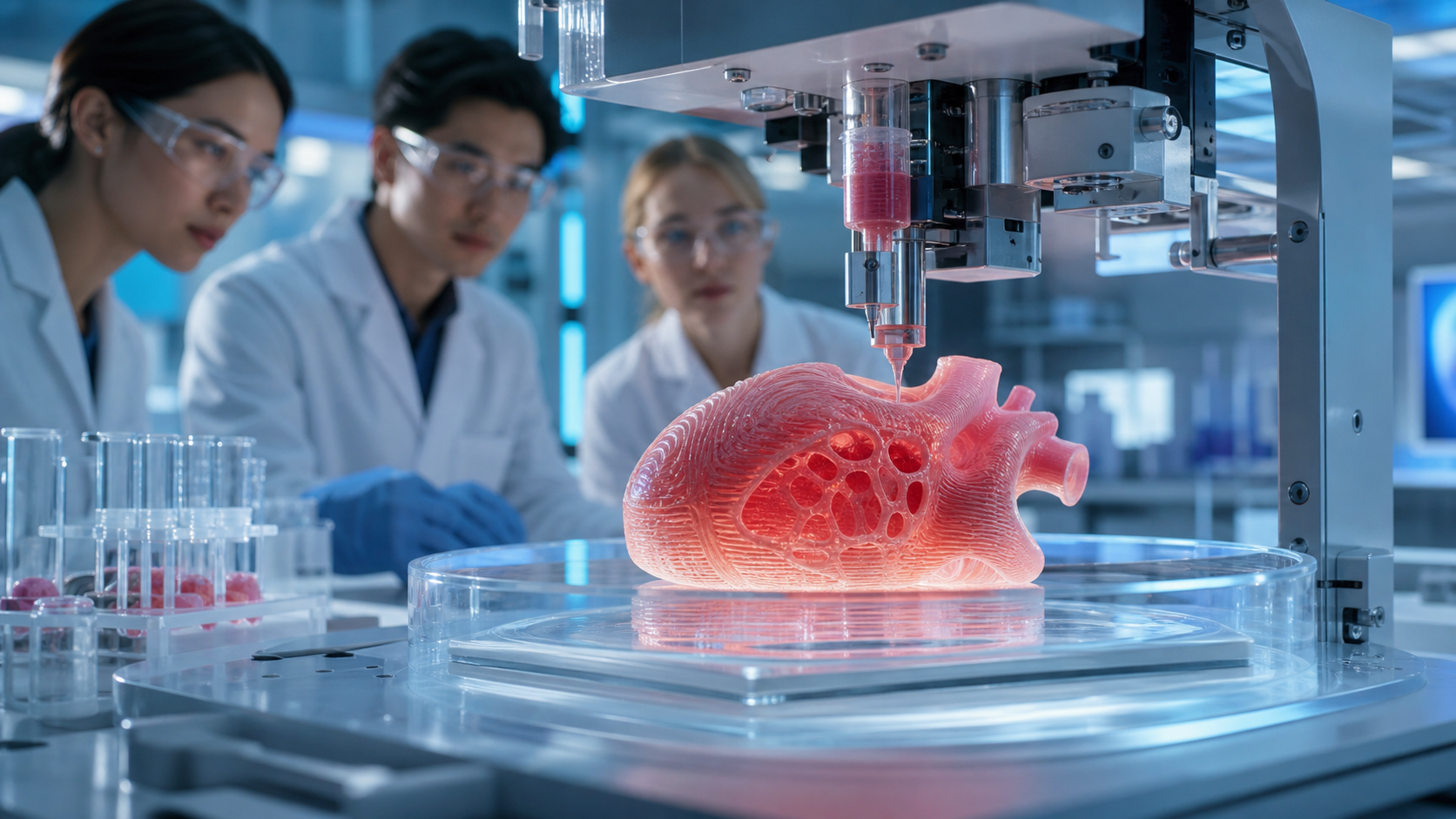
3D Bioprinting for Aging: Can We Print Replacement Organs and Tissues?
Explore how 3D bioprinting may address age-related organ failure by creating functional replacement tissues. Review current capabilities and future prospects.
12 min read
AI Diagnostics for Aging: Detecting Early Signs of Biological Decline
Learn how AI-powered diagnostic tools detect early aging markers from medical images, blood tests, and wearable data to enable proactive longevity interventions.
12 min read
AI Drug Discovery for Longevity: What Research Is Coming
How artificial intelligence is accelerating longevity drug discovery, from target identification to clinical trial design, and what it means for aging research.
13 min read