Vitamin K2 and Aging: The Missing Link in Longevity Nutrition
Vitamin K2 may protect against vascular calcification and bone loss during aging. Explore the research on this overlooked longevity nutrient.
Table of Contents
SUPPLEMENT NOTICE
The supplements discussed in this article are not intended to diagnose, treat, cure, or prevent any disease. Dosages mentioned reflect those used in specific research studies and should not be interpreted as recommendations. Always consult a healthcare professional before beginning any supplement regimen, especially if you have existing health conditions or take medications.
The Overlooked Vitamin
Among the vitamins relevant to aging, vitamin K2 may be the most underappreciated. While vitamin D has received enormous attention for its role in bone health and immune function, vitamin K2 works in close partnership with vitamin D yet receives far less recognition.
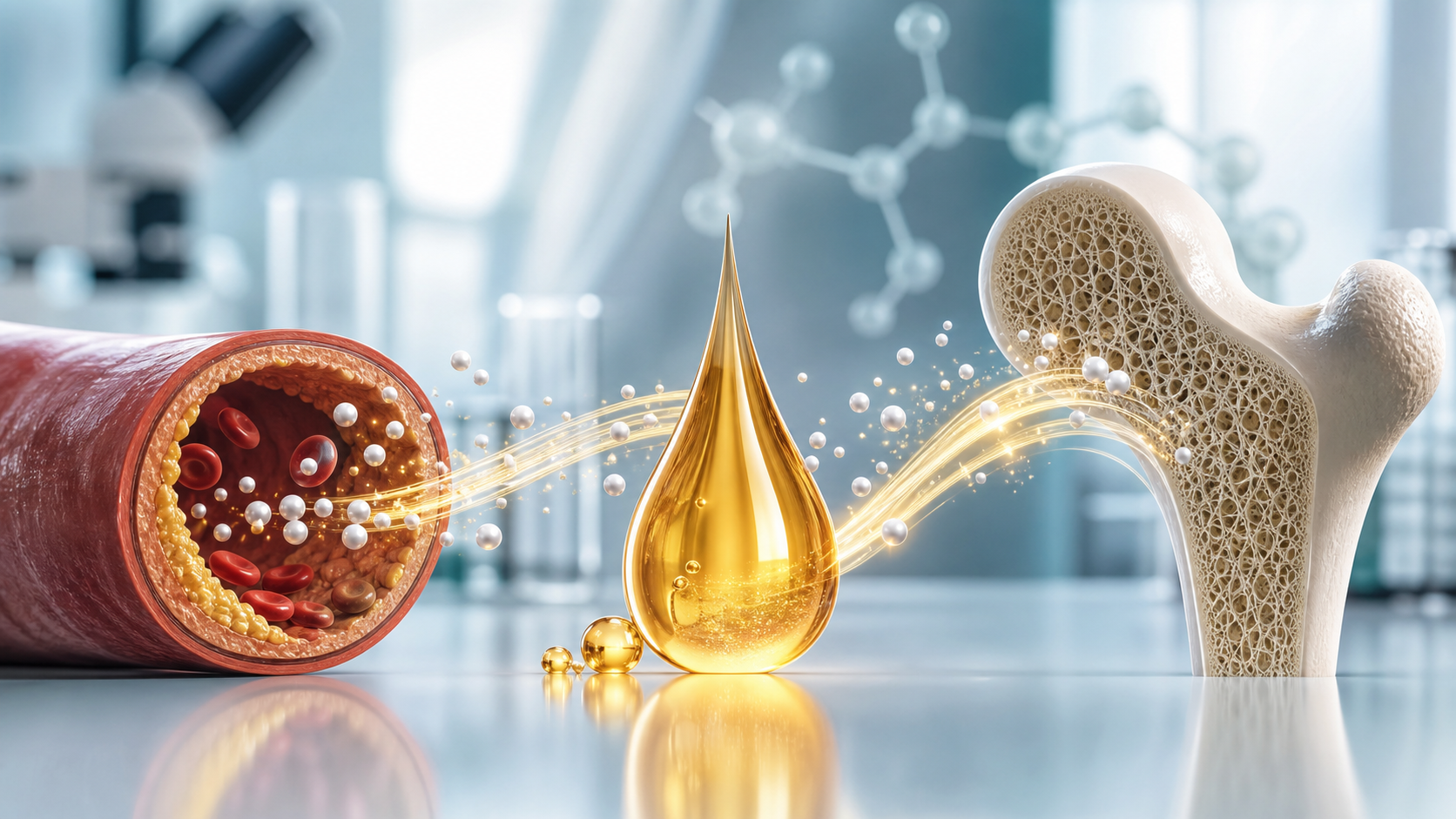
Vitamin K2, a group of compounds called menaquinones, plays a unique role in calcium metabolism that has direct implications for two of the most significant aspects of aging: vascular calcification and bone loss. By activating specific proteins that direct calcium to appropriate locations, vitamin K2 may help prevent the paradox of aging in which calcium accumulates in arteries (where it causes harm) while leaching from bones (where it is needed).
Understanding Vitamin K2
Forms of Vitamin K2
Vitamin K2 exists in several forms, designated MK-4 through MK-13, based on the length of their side chains. The two most researched forms are:
- MK-4: Found in animal products (egg yolks, butter, organ meats). Has a shorter half-life and may need to be taken multiple times daily.
- MK-7: Found in fermented foods, particularly natto (fermented soybeans). Has a longer half-life, providing more sustained blood levels with once-daily dosing.
MK-7 has become the preferred supplemental form due to its superior bioavailability and longer duration of action.
How K2 Differs From K1
Vitamin K1 (phylloquinone), abundant in leafy green vegetables, is primarily used by the liver for blood coagulation factor synthesis. Vitamin K2 appears to have distinct extrahepatic functions, activating proteins in bone, vasculature, and other tissues that K1 does not efficiently support.
This functional distinction explains why adequate K1 intake for normal clotting does not guarantee sufficient K2 for optimal bone and vascular health.
Vascular Calcification: The Silent Aging Process
What Is Vascular Calcification?
Vascular calcification, the accumulation of calcium in arterial walls, is one of the most reliable markers of cardiovascular aging. Once considered a passive, degenerative process, vascular calcification is now understood to be an actively regulated process involving osteogenic differentiation of vascular smooth muscle cells.
Calcified arteries become stiff, lose their ability to dilate and contract in response to blood flow demands, and contribute to systolic hypertension, heart failure, and cardiovascular events. Coronary artery calcium (CAC) scores, measured by CT scan, are among the strongest predictors of cardiovascular risk.
K2 and Matrix Gla Protein
Vitamin K2’s primary mechanism in vascular protection involves the activation of matrix Gla protein (MGP), a potent inhibitor of vascular calcification. MGP must be carboxylated (activated) by vitamin K2 to function. Without adequate K2, MGP remains in its inactive, uncarboxylated form (ucMGP), and its protective function is lost.
Research has shown that:
- High levels of ucMGP (inactive MGP) are associated with increased cardiovascular risk and mortality
- Vitamin K2 supplementation reduces ucMGP levels, indicating improved MGP activation
- K2-deficient animals develop spontaneous vascular calcification
The Rotterdam Study
A landmark 2004 prospective study published in the Journal of Nutrition followed 4,807 subjects for 7 to 10 years and found that higher dietary vitamin K2 intake was associated with:
- Significantly reduced risk of coronary heart disease
- Reduced risk of cardiovascular mortality
- Reduced risk of all-cause mortality
- Reduced aortic calcification
Notably, vitamin K1 intake showed no such associations, supporting the distinct cardiovascular role of K2.
Arterial Stiffness
A 2015 randomized controlled trial published in Thrombosis and Haemostasis demonstrated that supplementation with MK-7 (180 mcg daily for three years) significantly reduced arterial stiffness in healthy postmenopausal women compared to placebo. This finding suggests that K2 may not only prevent progression of vascular aging but may also partially reverse arterial stiffening.
Bone Health
Osteocalcin Activation
Vitamin K2 activates osteocalcin, a protein produced by osteoblasts that is essential for binding calcium to the bone mineral matrix. Like MGP, osteocalcin requires carboxylation by vitamin K2 to function properly.
Uncarboxylated osteocalcin is associated with:
- Reduced bone mineral density
- Increased fracture risk
- Impaired bone formation
Clinical Evidence for Bone Benefits
Research on vitamin K2 and bone health has produced encouraging results:
- Japanese studies using high-dose MK-4 (45 mg/day) have shown reduced fracture rates
- MK-7 supplementation has been associated with improved bone mineral density markers
- Combined vitamin D3 and K2 supplementation may provide synergistic bone benefits
A 2021 review in International Journal of Molecular Sciences detailed how K2 may support bone health through both osteocalcin activation and direct effects on osteoblast gene expression, potentially promoting bone formation while inhibiting bone resorption.
The D3-K2 Synergy
Why They Work Together
Vitamin D3 and K2 function as complementary partners in calcium metabolism:
- Vitamin D3 promotes intestinal calcium absorption, ensuring adequate calcium availability
- Vitamin K2 activates proteins (osteocalcin and MGP) that direct calcium to bones and away from soft tissues
Without adequate K2, the increased calcium absorption driven by vitamin D3 supplementation may potentially contribute to soft tissue calcification. This concern has led many practitioners to recommend K2 whenever vitamin D3 is supplemented, particularly at higher doses.
The Calcium Paradox
The calcium paradox refers to the observation that calcium often accumulates where it should not (arteries) while depleting from where it is needed (bones). Vitamin K2 may help resolve this paradox by activating the proteins responsible for proper calcium distribution.
Research suggests that populations with higher K2 intake, such as the Japanese who consume natto regularly, tend to have lower rates of both osteoporosis and cardiovascular disease, though multiple dietary and lifestyle factors contribute to these outcomes.
Additional Aging-Related Benefits
Mitochondrial Function
Emerging research suggests vitamin K2 may support mitochondrial function by serving as an electron carrier in the mitochondrial electron transport chain. This role could have implications for cellular energy production and aging, though this research is in early stages.
Anti-Inflammatory Effects
Studies have reported anti-inflammatory properties of vitamin K2, including modulation of NF-kB signaling and reduction of inflammatory cytokine production. These effects may contribute to K2’s overall anti-aging potential.
Cognitive Health
Preliminary research has identified associations between vitamin K status and cognitive function in older adults. Given K2’s potential roles in vascular health, inflammation modulation, and cellular energy production, a connection to brain aging is biologically plausible though not yet well established.
Dietary Sources
| Food | K2 Form | Content (mcg per serving) |
|---|---|---|
| Natto (50g) | MK-7 | 500-1000 |
| Hard cheese (50g) | MK-8, MK-9 | 40-80 |
| Soft cheese (50g) | MK-8, MK-9 | 30-60 |
| Egg yolk | MK-4 | 15-30 |
| Butter (15g) | MK-4 | 2-5 |
| Chicken liver (100g) | MK-4 | 10-15 |
Natto is by far the richest dietary source, but its strong flavor limits its appeal outside Japan. For most Western populations, supplementation may be the most practical way to achieve meaningful K2 intake.
Safety and Interactions
Blood Thinning Medications
The most important safety consideration for vitamin K2 is its potential interaction with warfarin (Coumadin) and other vitamin K-dependent anticoagulants. Vitamin K can counteract the effects of these medications, potentially reducing their efficacy.
Individuals taking warfarin should not supplement with vitamin K2 without close medical supervision. Newer anticoagulants (DOACs) do not interact with vitamin K.
Generally Safe
For individuals not taking vitamin K-dependent anticoagulants, vitamin K2 supplementation at typical doses (100-200 mcg MK-7) appears very safe. No upper intake level has been established, and toxicity from vitamin K2 has not been reported in the scientific literature.
The Bottom Line
Vitamin K2 may be one of the most important yet underconsumed nutrients for healthy aging. Its unique role in calcium metabolism positions it at the intersection of two major age-related conditions: cardiovascular disease and osteoporosis. The synergy between vitamins D3 and K2 suggests they should be considered as a partnership rather than individually.
While the evidence base continues to grow, current research supports vitamin K2 as a promising longevity-relevant nutrient deserving of greater attention in both clinical practice and personal health optimization. Consult your healthcare provider before starting vitamin K2 supplementation, especially if you take blood-thinning medications.
Frequently Asked Questions
What is the difference between vitamin K1 and K2?
Can vitamin K2 reverse arterial calcification?
Should I take vitamin K2 with vitamin D?
Sources
Stay Updated on Longevity Science
Weekly research digests. No spam, unsubscribe anytime.
Related Articles
Alpha-Ketoglutarate (AKG) and Aging: What Research Reveals
Explore how alpha-ketoglutarate (AKG) may influence aging through epigenetic regulation, mitochondrial function, and cellular energy metabolism.
12 min read
Alpha-Lipoic Acid and Aging: The Universal Antioxidant for Longevity
Explore how alpha-lipoic acid supports aging through antioxidant recycling, glucose metabolism, and mitochondrial function. Review the clinical evidence.
11 min readApigenin for Longevity: Benefits, Research, and What Science Reveals
Apigenin, found in chamomile and parsley, may support longevity through NAD+ preservation and senolytic effects. Review the latest research.
9 min read