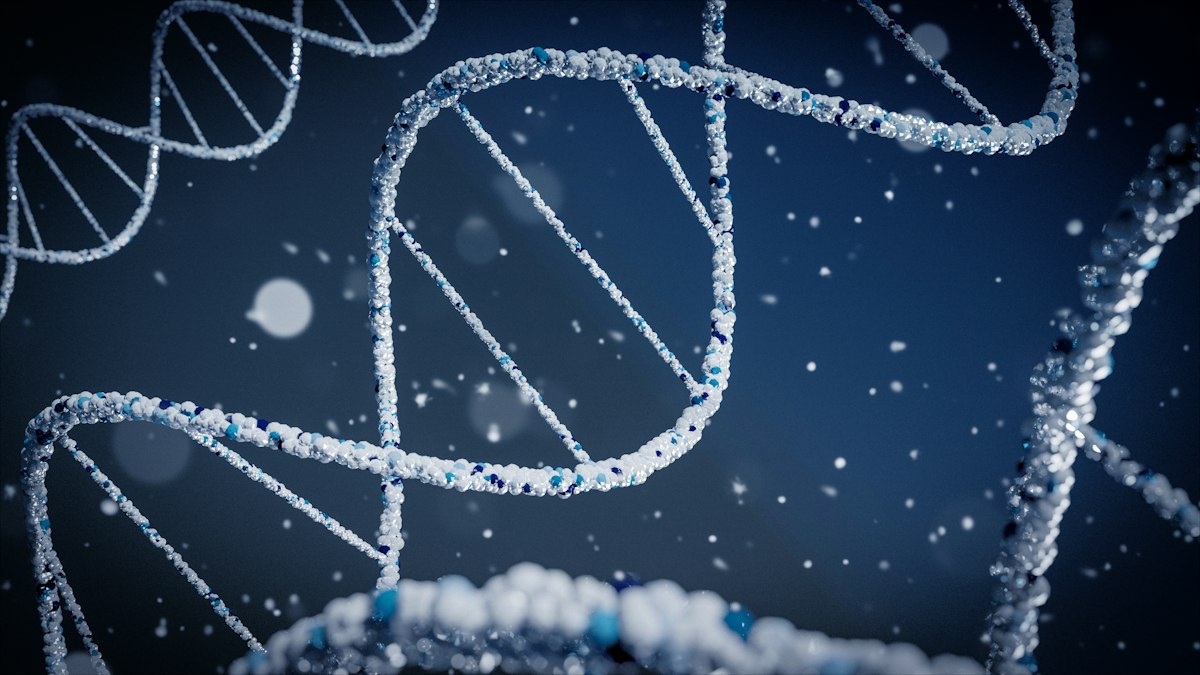
Epigenetic Alterations: How Your Genes Age Without Changing
Understand how epigenetic alterations drive aging through DNA methylation changes, histone modifications, and chromatin remodeling -- and what research suggests.
Table of Contents
DISCLAIMER
This article is for informational purposes only and does not constitute medical advice. The statements in this article have not been evaluated by the FDA. The information presented is based on published research and should not be used as a substitute for professional medical guidance. Consult your physician before starting any supplement or health protocol.
What Makes Epigenetic Alterations a Hallmark of Aging?
Your DNA sequence — the genetic code you inherited — remains remarkably stable throughout life. Yet the same genome produces vastly different outcomes depending on your age: the genes expressed in a 20-year-old’s cells differ substantially from those expressed in an 80-year-old’s cells. How is this possible?
The answer lies in the epigenome — the complex system of chemical modifications and structural arrangements that control which genes are turned on and off in each cell, and when. The term “epigenetic” literally means “above the genetic,” referring to information layers that sit atop the DNA sequence itself.
The 2023 expanded hallmarks of aging review in Cell reaffirmed epigenetic alterations as one of the primary hallmarks of the aging process (PMID: 36599349). This recognition reflects a fundamental insight: aging may be driven not by the loss of genetic information, but by the progressive corruption of the epigenetic instructions that tell cells how to read that information.
The Three Layers of Epigenetic Information
1. DNA Methylation
DNA methylation is the most studied epigenetic mark in aging research. It involves the addition of a methyl group (CH3) to cytosine bases in DNA, primarily at CpG dinucleotides (cytosine followed by guanine).
How DNA methylation works:
| Methylation State | Effect on Gene Expression | Role in Aging |
|---|---|---|
| Methylated promoter | Gene silenced | May inappropriately silence needed genes |
| Unmethylated promoter | Gene active | May inappropriately activate harmful genes |
| Gene body methylation | Generally associated with active transcription | Becomes dysregulated with age |
| Repetitive element methylation | Keeps transposable elements silenced | Loss of methylation may activate genomic parasites |
A 2014 study extensively characterized epigenetic drift during aging, documenting how methylation patterns become progressively more variable and disordered with age (PMID: 24788706).
Age-related DNA methylation changes:
-
Global hypomethylation: Overall DNA methylation levels tend to decrease with age, particularly at repetitive elements. This may activate previously silenced transposable elements and contribute to genomic instability.
-
CpG island hypermethylation: Paradoxically, while global methylation decreases, methylation at specific CpG islands (often near gene promoters) tends to increase. This may silence tumor suppressor genes and other important genes.
-
Epigenetic drift: Methylation patterns become more variable between individuals with age, and the cell-to-cell consistency of methylation patterns within tissues decreases. This “drift” represents a loss of epigenetic fidelity.
-
Epigenetic clock patterns: Specific CpG sites change methylation in highly predictable patterns with age, forming the basis of epigenetic clocks. Steve Horvath’s pioneering work identified 353 such sites that together estimate biological age with remarkable accuracy (PMID: 23177740).
2. Histone Modifications
DNA is wound around protein complexes called histones, forming a structure called chromatin. Chemical modifications to histone proteins dramatically influence whether the associated DNA is accessible for gene expression.
A 2019 review detailed how histone modifications change with aging and their consequences for cellular function (PMID: 31230877).
Key histone modifications in aging:
| Modification | Normal Function | Age-Related Change | Consequence |
|---|---|---|---|
| H3K9me3 | Heterochromatin formation (gene silencing) | Generally decreases | Loss of silencing at normally repressed regions |
| H3K27me3 | Polycomb-mediated silencing | Redistributed | Altered developmental gene expression |
| H4K16ac | Active chromatin mark | Decreases | Impaired gene activation |
| H3K4me3 | Active gene promoters | Altered distribution | Dysregulated gene expression |
| H3K56ac | DNA replication and repair | Decreases | Impaired DNA damage response |
3. Chromatin Remodeling and Architecture
Beyond chemical modifications, the three-dimensional organization of chromatin changes with age:
Heterochromatin loss: Regions of condensed, silenced chromatin (heterochromatin) tend to relax with age, potentially allowing expression of normally silenced genes, transposable elements, and cryptic transcripts.
Topologically associating domain (TAD) disruption: The genome is organized into TADs — regions that frequently interact with each other. With age, TAD boundaries may become less defined, potentially leading to aberrant gene regulatory interactions.
Nuclear lamina changes: The nuclear lamina, a protein meshwork lining the inner nuclear membrane, helps organize chromatin. Age-related changes in lamin proteins (similar to those seen in the premature aging disease progeria) may disrupt chromatin organization.
How Epigenetic Alterations Drive Aging
The functional consequences of epigenetic aging are wide-ranging:
Loss of Cell Identity
Each cell type in the body maintains a distinct epigenetic profile that defines its identity — what makes a liver cell a liver cell and a neuron a neuron. With age, these distinct profiles become blurred:
- Cells may inappropriately express genes belonging to other cell types
- Cell type-specific functions may decline as identity programs erode
- This “identity crisis” may underlie age-related organ dysfunction
David Sinclair’s “Information Theory of Aging” proposes that this progressive loss of epigenetic information is the primary driver of aging — and that restoring this information could reverse the aging process (PMID: 22901806).
Aberrant Gene Expression
Epigenetic alterations lead to widespread changes in gene expression:
- Tumor suppressor genes may be inappropriately silenced
- Inflammatory genes may be inappropriately activated
- Metabolic gene regulation may become dysregulated
- Stress response genes may lose their proper regulation
Transposable Element Reactivation
The human genome contains millions of transposable elements — “jumping genes” that are normally kept silenced by DNA methylation and heterochromatin. With age, loss of these epigenetic controls may allow transposable elements to become active, potentially:
- Causing DNA damage through reinsertion
- Triggering inflammatory responses through cytoplasmic DNA sensing
- Contributing to genomic instability
Stem Cell Dysfunction
Epigenetic changes in stem cells may impair their ability to self-renew and differentiate properly, contributing to the stem cell exhaustion hallmark discussed elsewhere.
Epigenetic Clocks: Measuring Epigenetic Aging
The predictable nature of certain DNA methylation changes with age has enabled the development of epigenetic clocks — mathematical algorithms that estimate biological age from methylation data.
The Evolution of Epigenetic Clocks
| Clock | Year | CpG Sites | Key Innovation |
|---|---|---|---|
| Horvath | 2013 | 353 | First multi-tissue clock |
| Hannum | 2013 | 71 | Blood-based clock |
| PhenoAge | 2018 | 513 | Trained on clinical biomarkers |
| GrimAge | 2019 | ~1,000 | Trained on mortality data |
| DunedinPACE | 2022 | ~173 | Measures pace of aging |
These clocks demonstrate that epigenetic aging is:
- Measurable: Quantifiable through DNA methylation analysis
- Predictive: Accelerated epigenetic aging predicts earlier mortality and disease
- Modifiable: Lifestyle interventions and certain compounds can influence clock readings
- Universal: Observed across human populations and in other mammalian species
What Drives Epigenetic Alterations?
Environmental Factors
- Smoking: One of the strongest environmental influences on DNA methylation, with specific and well-documented methylation changes
- Air pollution: Associated with altered methylation at inflammation-related genes
- Diet: Nutrient availability affects methyl donor supply and epigenetic enzyme function
- Chemical exposure: Various environmental chemicals can disrupt epigenetic marks
- UV radiation: Sun exposure causes specific epigenetic changes in skin cells
Lifestyle Factors
- Exercise: Regular physical activity is associated with slower epigenetic aging
- Sleep: Poor sleep quality and insufficient duration are associated with accelerated epigenetic aging
- Stress: Chronic psychological stress accelerates epigenetic drift
- Diet quality: Mediterranean-style diets are associated with slower epigenetic aging
Metabolic Factors
Epigenetic modifications depend on metabolic intermediates as substrates and cofactors:
| Metabolite | Epigenetic Role | Aging Connection |
|---|---|---|
| SAM (S-adenosylmethionine) | Methyl donor for DNA and histone methylation | Folate/B12 status affects supply |
| Alpha-ketoglutarate | Cofactor for TET DNA demethylases | Declines with age |
| Acetyl-CoA | Substrate for histone acetylation | Metabolic state influences availability |
| NAD+ | Required for sirtuin deacetylase activity | Declines significantly with age |
This metabolic connection means that changes in cellular metabolism during aging directly affect the ability to maintain proper epigenetic marks.
Can Epigenetic Aging Be Reversed?
Partial Epigenetic Reprogramming
The most dramatic demonstration that epigenetic aging can be reversed comes from partial reprogramming research. By briefly expressing Yamanaka factors (Oct4, Sox2, Klf4, and optionally c-Myc), researchers have shown that:
- Aged cells can be reset to a younger epigenetic state
- Epigenetic clock age can be reduced in reprogrammed cells
- Tissue function can be restored in aged animals
- The effects are achievable without complete loss of cell identity
A 2012 review outlined the theoretical framework for resetting the aging clock through epigenetic reprogramming (PMID: 22901806), and subsequent years have provided increasing experimental support.
Lifestyle Interventions
Several lifestyle interventions have been shown to influence epigenetic aging:
| Intervention | Effect on Epigenetic Age | Evidence Level |
|---|---|---|
| Caloric restriction | Slows DunedinPACE by 2-3% | RCT (CALERIE) |
| Multi-component lifestyle program | Reduced Horvath age by ~3 years | Small RCT (Fitzgerald) |
| Regular exercise | Associated with slower epigenetic aging | Multiple observational studies |
| Mediterranean diet | Associated with slower epigenetic aging | Observational studies |
| Smoking cessation | Gradual normalization of methylation | Prospective studies |
Pharmacological Approaches
Several compounds are being investigated for their effects on epigenetic aging:
- NAD+ precursors (NMN/NR): By restoring sirtuin function, may support proper histone deacetylation
- Alpha-ketoglutarate: As a TET enzyme cofactor, may support DNA demethylation
- Metformin: May influence multiple epigenetic mechanisms through AMPK activation
- Rapamycin: mTOR inhibition may affect chromatin remodeling and histone modifications
- Sulforaphane: HDAC inhibitor activity may influence histone acetylation patterns
The Information Theory of Aging
One of the most influential frameworks for understanding epigenetic aging is the Information Theory of Aging, proposed by David Sinclair and colleagues at Harvard Medical School.
The theory proposes that:
-
Aging is primarily an information problem. The genome (hardware) remains largely intact, but the epigenome (software) becomes corrupted over time.
-
DNA repair is the trigger. When DNA damage occurs and is repaired, epigenetic marks at the repair site must be temporarily removed and replaced. Over time, this repeated disruption and imperfect restoration of epigenetic marks leads to progressive information loss.
-
Information loss leads to dysfunction. As cells lose epigenetic information, they gradually lose their ability to properly read genetic instructions, leading to the functional decline we recognize as aging.
-
The information is still there. Because the underlying DNA sequence is intact, it may be possible to restore the correct epigenetic program through reprogramming — essentially “rebooting” the cellular software.
This framework is powerful because it suggests that aging is fundamentally reversible — the genetic code has not been lost, only the instructions for reading it have become corrupted. If the correct epigenetic program can be restored, cellular function should follow.
Outstanding Questions
Despite significant progress, important questions about epigenetic alterations and aging remain:
-
Causality vs. correlation: To what extent are epigenetic changes drivers versus consequences of aging? Reprogramming studies suggest a causal role, but the degree of contribution relative to other hallmarks is debated.
-
Tissue specificity: How do epigenetic aging patterns differ across tissues, and what are the implications for tissue-specific interventions?
-
Individual variation: What accounts for the substantial variation in epigenetic aging rates among individuals of the same chronological age?
-
Interaction with genetics: How do genetic variants influence susceptibility to epigenetic aging?
-
Clinical application: When and how will epigenetic rejuvenation move from laboratory demonstration to clinical therapy?
Key Takeaways
Epigenetic alterations represent one of the most fundamental and well-characterized hallmarks of aging. The progressive corruption of DNA methylation patterns, histone modifications, and chromatin architecture leads to widespread changes in gene expression that underlie much of the functional decline associated with aging.
The development of epigenetic clocks has provided unprecedented tools for measuring biological aging and evaluating interventions. Research consistently demonstrates that epigenetic aging is modifiable — influenced by lifestyle factors, dietary patterns, and potentially pharmacological interventions.
Perhaps most importantly, the reversible nature of epigenetic changes distinguishes this hallmark from others (such as DNA mutations) that are inherently more difficult to address. The demonstration that partial reprogramming can reset epigenetic age in animal models represents one of the most exciting developments in aging research, offering the possibility that epigenetic aging may not only be slowed but actually reversed.
For individuals today, the most practical approach to managing epigenetic aging involves the lifestyle factors consistently associated with slower epigenetic drift: regular exercise, a nutrient-dense diet, adequate sleep, effective stress management, and avoidance of major epigenetic disruptors like smoking. As the science of epigenetic rejuvenation advances, these foundational practices may eventually be augmented by targeted epigenetic therapies.
Frequently Asked Questions
What are epigenetic alterations in aging?
Are epigenetic changes reversible?
Can lifestyle factors influence epigenetic aging?
Sources
Stay Updated on Longevity Science
Weekly research digests. No spam, unsubscribe anytime.
Related Articles
Autophagy and Aging: Your Body's Cellular Cleanup System
Explore autophagy, your body's cellular cleanup system, and its critical role in aging and longevity. Research suggests modulating autophagy may support cellular health.
12 min read
Genomic Instability and Aging: How DNA Damage Drives the Aging Process
Explore how genomic instability contributes to aging, the role of DNA damage and repair mechanisms, and emerging research on protecting genomic integrity.
15 min read
The 12 Hallmarks of Aging Explained Simply
A clear explanation of the 12 hallmarks of aging - the biological processes that drive aging, from telomere shortening to cellular senescence.
12 min read